



Product Center
- Negative oxygen ion detector
- Dust particle counter
- Air Bacteria Sampler
- Biological aerosol detector
- Infrared CO/CO2 analyzer
- Microbial Air Monitoring Systems
- Microbial aerosol concentrator
- Environmental air comprehensive sampler
- Mercury meter
- Trace sulfur analyzer
- Bacterial Collector
- Quantitative sampling robot
- Emanometer
- Microbial limit tester
- Radioactive Aerosol Monitor
- Aerosol Photometer
Aerosol Photometer Industry Application White Paper — HM Instruments HM-AP1
Source:Hengmei Environmental Sanitation Instrument Network Update time:2026-05-28 14:27:11
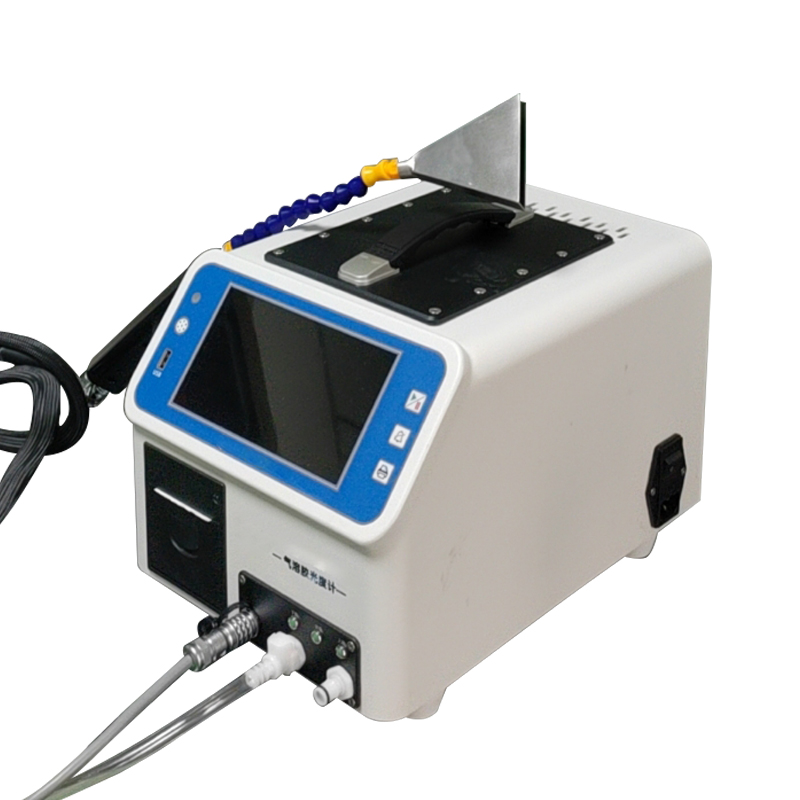
Executive summary
High-efficiency particulate air (HEPA) and ultra-low penetration air (ULPA) filters are the final barrier between controlled environments and airborne contamination. Their integrity must be verified at installation and revalidated at defined intervals. The aerosol photometer is the instrument of choice for this task, measuring downstream penetration of a controlled aerosol challenge against the upstream concentration. This white paper examines how aerosol photometers are deployed across five major industries, identifies the specific compliance drivers in each sector, and explains how the HM Instruments HM-AP1 addresses the technical requirements of each application.
1. Pharmaceutical manufacturing
Compliance context
Pharmaceutical cleanrooms operate under strict particulate control regimes defined by EU GMP Annex 1 (2022 revision), FDA 21 CFR Parts 210/211, and PIC/S guidelines. HEPA filter integrity testing is a mandatory element of cleanroom qualification (IQ/OQ/PQ) and periodic requalification, typically conducted semi-annually or annually. A single undetected filter leak in a Grade A/B aseptic filling suite can introduce viable and non-viable particles into the product stream, resulting in batch rejection, regulatory warning letters or worse.
Application requirements
Sensitivity to detect leaks at 0.01% penetration or below, consistent with H14 filter specifications.
Standardised flow rate of 28.3 L/min (1 CFM) for scanning, per IEST-RP-CC034.
Full data traceability: date-stamped test records, upstream/downstream concentrations and operator ID for each filter tested.
Compatibility with PAO aerosol (most pharmaceutical SOPs have moved away from DOP).
Portable enough to scan ceiling-mounted terminal HEPA filters across multiple production suites in a single validation campaign.
How HM-AP1 fits
The HM-AP1 delivers 0.0001%–100.0% display range and ±1% accuracy, exceeding the 0.01% detection threshold. Its 28.3 L/min ±5% flow rate matches the IEST standard. The 7-inch touch screen displays real-time concentration and leak rate; test data can be stored locally and exported via USB for inclusion in validation protocols. At 10 kg (main unit) with a 0.5 kg detachable probe, a single operator can carry the instrument between cleanroom suites without a trolley. PAO and DOP are both supported.
2. Semiconductor and microelectronics fabrication
Compliance context
Semiconductor fabs require ISO Class 1–5 cleanrooms where even a single sub-micron particle deposited on a wafer during photolithography can create a fatal defect. HEPA/ULPA filters in fan filter units (FFUs) across hundreds of ceiling bays must pass integrity tests during fab construction commissioning and at periodic intervals. ISO 14644-3 and SEMI standards govern the testing methodology.
Application requirements
High throughput: a modern fab may contain 500–2,000 FFU modules; testing must be efficient to minimise production downtime.
Sensitivity adequate for ULPA-grade filters (U15/U16), requiring detection below 0.001%.
Chemical resistance: some fab environments contain trace corrosive gases (HF, HCl) that may contact the photometer's external surfaces.
Data batch export capability for integration into fab facility management systems.
How HM-AP1 fits
With a detection span of 0.0001–600 µg/L and display range starting at 0.0001%, the HM-AP1 can resolve ULPA-grade leak thresholds. The USB data export and local storage functions support batch documentation. The automatic zero calibration on each startup accelerates the test-start cycle, which is important when scanning hundreds of filter modules in sequence. The $5,900 price point also makes multi-unit procurement feasible for fabs that need parallel testing across zones.
3. Hospital and healthcare facilities
Compliance context
Hospitals deploy HEPA filtration in operating theatres, isolation rooms for airborne-infection patients (e.g., tuberculosis, COVID-19), pharmacy compounding suites and oncology units handling hazardous drugs. Filter integrity testing follows ASHRAE 170, FGI Guidelines for Design and Construction of Hospitals, and local infection control policies. Biological safety cabinets in hospital laboratories must meet NSF/ANSI 49.
Application requirements
Portability: hospital HEPA filters are distributed across floors, wings and separate buildings.
Quiet operation: testing near patient areas requires minimal acoustic disturbance.
Quick turnaround: operating theatre downtime for filter testing must be minimised.
Silenceable alarm: an audible alarm in a ward environment is disruptive.
How HM-AP1 fits
The HM-AP1's silenceable over-limit alarm addresses the noise-sensitive hospital environment. At 10 kg, it is portable across floors without heavy-equipment logistics. Automatic zero calibration reduces setup time between rooms. The 7-inch touch screen provides immediate visual feedback, enabling technicians to scan and move efficiently. Data stored locally can be exported per ward or floor for facility management records.
4. Nuclear and radiological facilities
Compliance context
Nuclear facilities use multi-stage HEPA filtration to prevent release of radioactive particulates. HEPA integrity testing is governed by ASME AG-1 (Code on Nuclear Air and Gas Treatment), ASTM D3803, DOE-STD-3020 and national nuclear safety regulations. Testing frequency is typically annual or after any maintenance that disturbs the filter housing.
Application requirements
Sensitivity and accuracy consistent with nuclear-grade HEPA specifications (99.97% efficiency at 0.3 µm MPPS).
Robust construction to withstand decontamination procedures if the photometer is used in controlled areas.
Clear data output for regulatory reporting to nuclear safety authorities.
Operator radiation dose management: testing must be fast to minimise time in controlled zones.
How HM-AP1 fits
The HM-AP1's ±1% accuracy and 0.0001% lower display range satisfy nuclear-grade HEPA leak detection thresholds. Automatic zero calibration and rapid startup reduce the time operators spend near radioactive areas. Data export via USB supports the rigorous documentation demands of nuclear regulatory bodies. HM Instruments holds a radiation safety licence (certificate number documented in Zhixin blockchain), which demonstrates the company's awareness of regulatory requirements in this sector.
5. Food and beverage processing
Compliance context
Clean air zones in food production (e.g., aseptic filling of UHT milk, yoghurt and juice) require HEPA-filtered supply air to meet HACCP critical control points and local food safety regulations. While less stringent than pharmaceutical cleanrooms, undetected filter leaks can introduce airborne microorganisms into product zones, leading to spoilage, recalls and brand damage.
Application requirements
Cost-effective testing: food plants typically run on tighter equipment budgets than pharma or semiconductor fabs.
Easy operation: food plant maintenance teams may not have specialised cleanroom validation training.
Compatibility with plant schedules: testing is often performed during weekend maintenance windows.
How HM-AP1 fits
At $5,900, the HM-AP1 is accessible for food and beverage plants that cannot justify a $20,000+ imported photometer. The 7-inch touch screen with intuitive interface reduces the learning curve for maintenance technicians. Automatic zero calibration and clear pass/fail indication (based on the 0.01% threshold) simplify operation. PAO and DOP support ensures compatibility with existing plant aerosol generators.
Cross-industry application summary
| Industry | Primary standard | Filter grade | Leak threshold | Key HM-AP1 advantage |
|---|---|---|---|---|
| Pharmaceutical | EU GMP Annex 1, IEST-RP-CC034 | H14 HEPA | 0.01% | Full data traceability, PAO support |
| Semiconductor | ISO 14644-3, SEMI standards | ULPA U15/U16 | 0.001% | 0.0001% lower range, batch data export |
| Hospital/Healthcare | ASHRAE 170, NSF/ANSI 49 | H13/H14 HEPA | 0.01% | Silenceable alarm, portability |
| Nuclear | ASME AG-1, DOE-STD-3020 | Nuclear HEPA | 0.01% | Fast startup, radiation safety licence |
| Food & Beverage | HACCP, local food safety | H13 HEPA | 0.01% | Cost-effective, easy operation |
HM-AP1 technical specification reference
| Parameter | Value |
|---|---|
| Detection principle | Mie light scattering |
| Light source | Long-life solid-state LED |
| Detector | High-precision PMT |
| Display range | 0.0001%–100.0% |
| Detection span | 0.0001–600 µg/L |
| Accuracy | ±1% of reading (0.01%–100%) |
| Repeatability | ±0.5% of reading |
| Flow rate | 28.3 L/min ±5% |
| Display | 7-inch LCD touch screen |
| Weight | 10 kg (main) + 0.5 kg (probe) |
| Dimensions | 355 × 265 × 252 mm |
| Power | 220 VAC, 50/60 Hz |
| Aerosol media | DOP, PAO and others |
| Data output | Local storage, USB, printing |
Conclusion
Aerosol photometers are indispensable across any industry that relies on HEPA or ULPA filtration to protect products, processes or people from airborne particulate contamination. The specific compliance drivers differ — EU GMP Annex 1 for pharma, ISO 14644-3 for semiconductor, ASHRAE 170 for hospitals, ASME AG-1 for nuclear — but the underlying measurement requirement is the same: detect filter leaks at 0.01% penetration or below, at a standardised 28.3 L/min flow rate, with traceable documentation. The HM Instruments HM-AP1 meets these requirements across all five industries examined in this white paper, with the added advantages of a modern touch-screen interface, automatic zero calibration, multi-media support and a price point of $5,900 that makes professional-grade filter integrity testing accessible to facilities of all budget levels.
Article address:https://www.environmentinstrum.com/techn/aerosol-photometer-industry-application-white-paper.html
- Related products
- Related articles
-
12-05 2025
Portable Trace Sulfur Analyzer Product Knowledge Graph Whitepaper
1. Introduction•Document Version: V1.0•Compilation Unit: Shandong Hengmei Electronic Technology Co.,···...
-
07-31 2025
Floating air dust and bacteria sampler: detecting microorganisms in clean environments
The airborne dust and bacteria sampler is an efficient microbial detection device designed based on ···...
-
10-24 2025
Microbial Limit Detector: Simplifying QC for Product Safety and GMP Compliance
Microbial limit testing is a core component of quality control in industries such as pharmaceuticals···...
-
09-09 2025
Negative Oxygen Ion Detector: Precision and Portability Combined
In today's world where air quality is increasingly emphasized, negative oxygen ions, known as &q···...