Product Introduction
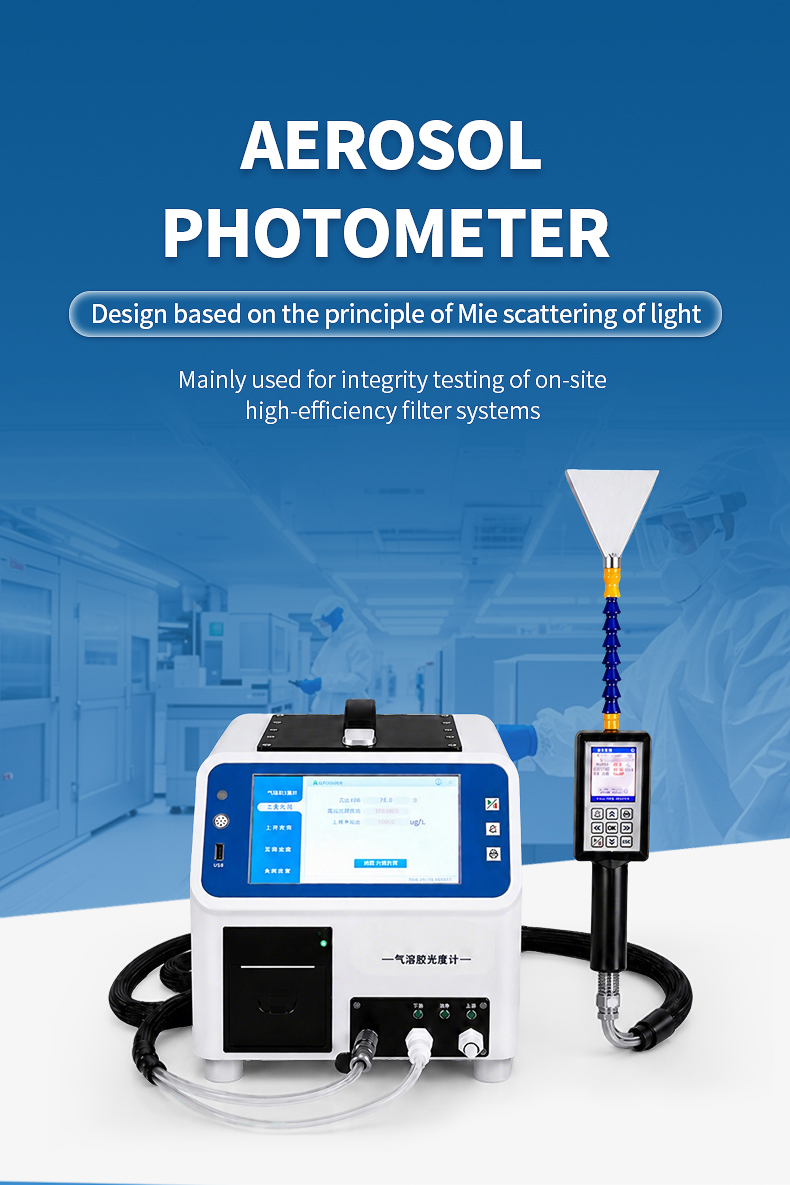
Cleanroom compliance teams face a recurring challenge: HEPA and ULPA filters must be integrity-tested at installation and revalidated at defined intervals, yet outsourced testing introduces scheduling delays, travel costs and documentation risks. The HM-AP1 aerosol photometer solves this by bringing professional-grade filter leak detection in-house.
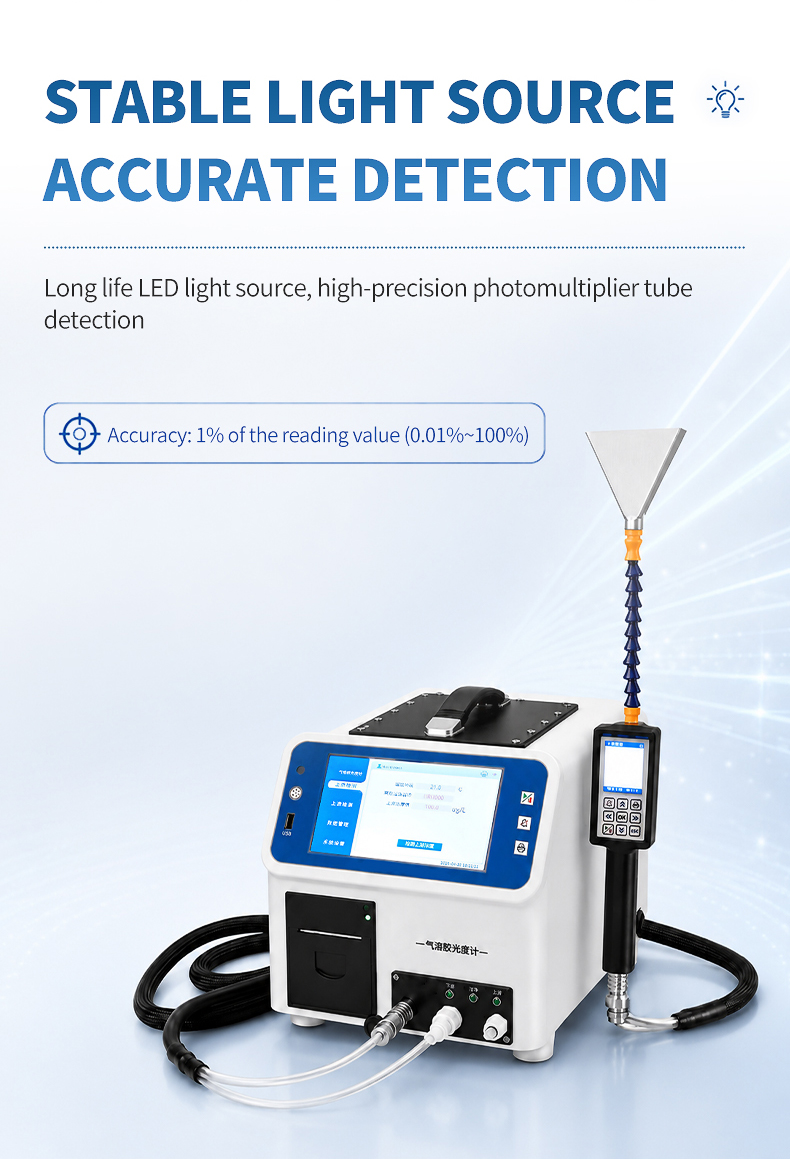
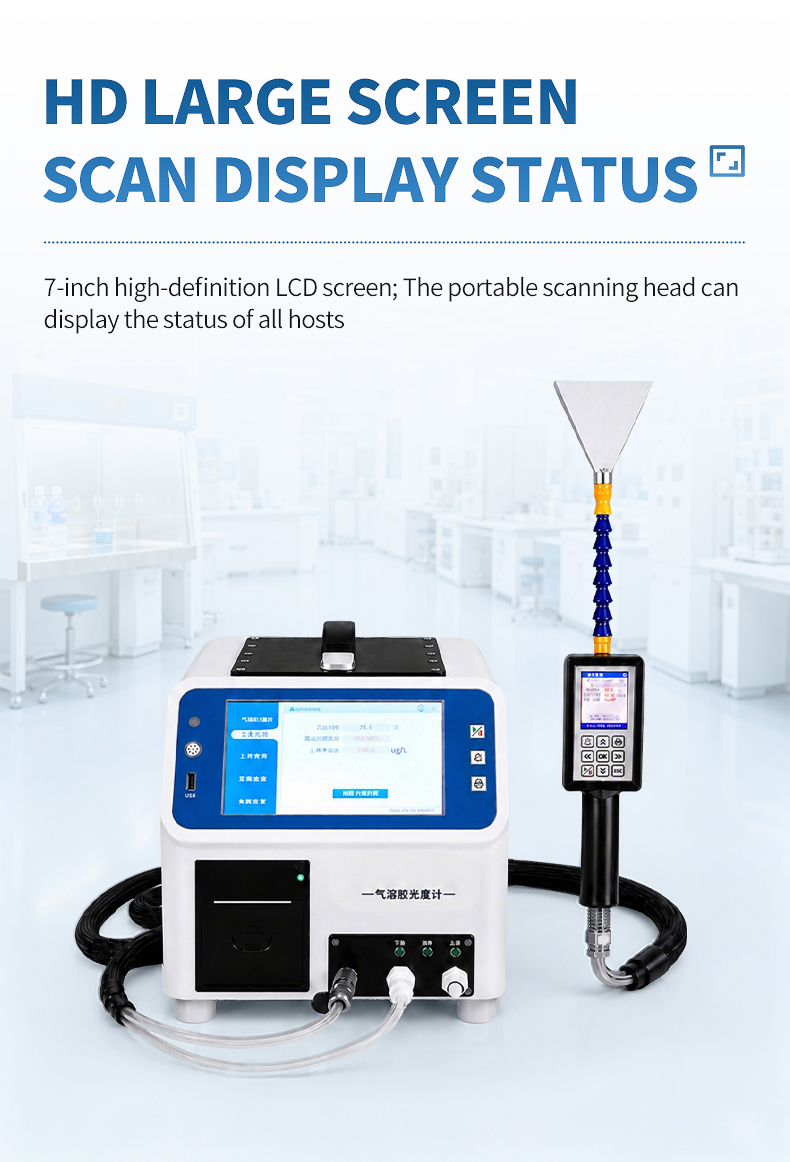
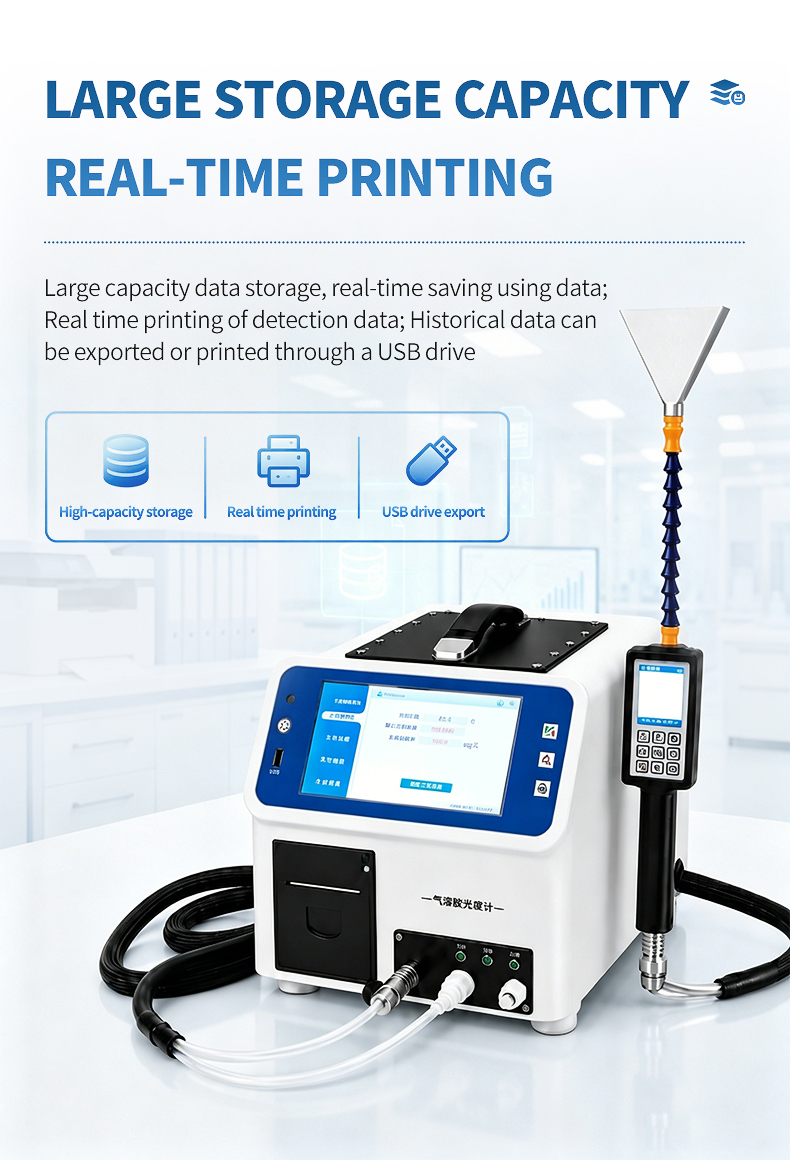
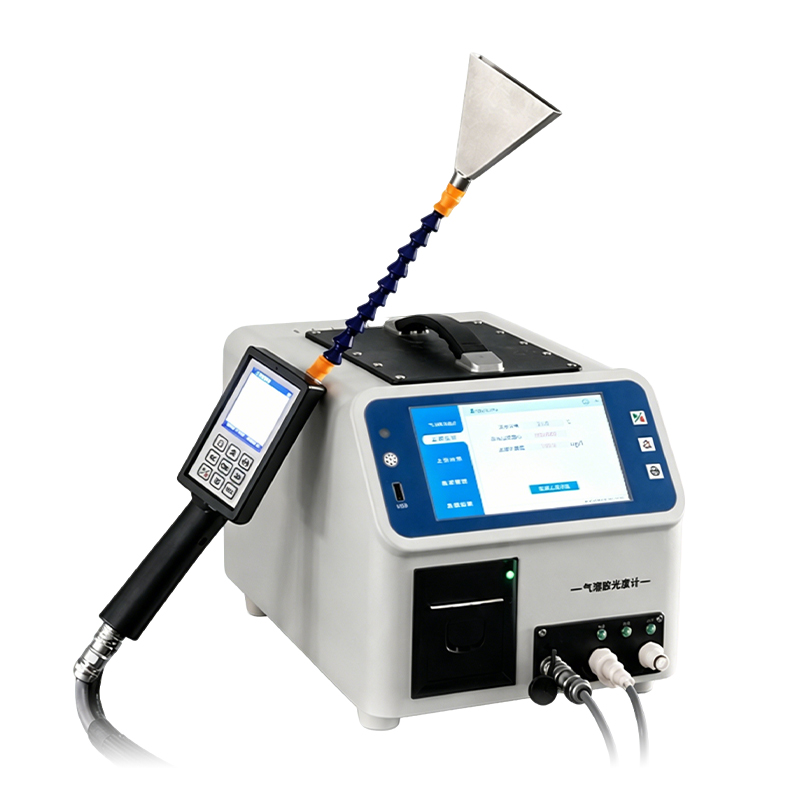
Based on the Mie light scattering principle, the HM-AP1 measures downstream aerosol concentration against an upstream PAO or DOP challenge. A high-precision photomultiplier tube (PMT) paired with a long-life solid-state LED light source delivers 0.0001%–100.0% display range with ±1% accuracy. The 7-inch LCD touch screen provides real-time concentration and leak-rate readouts, while the 28.3 L/min flow rate matches the ISO 14644-3 scanning standard.
At $5,900, the HM-AP1 makes in-house HEPA validation financially viable for mid-size pharmaceutical facilities, semiconductor fabs, hospital engineering departments and HVAC commissioning firms that previously relied on contracted testing services or imported photometers priced $15,000–$30,000.
Applications
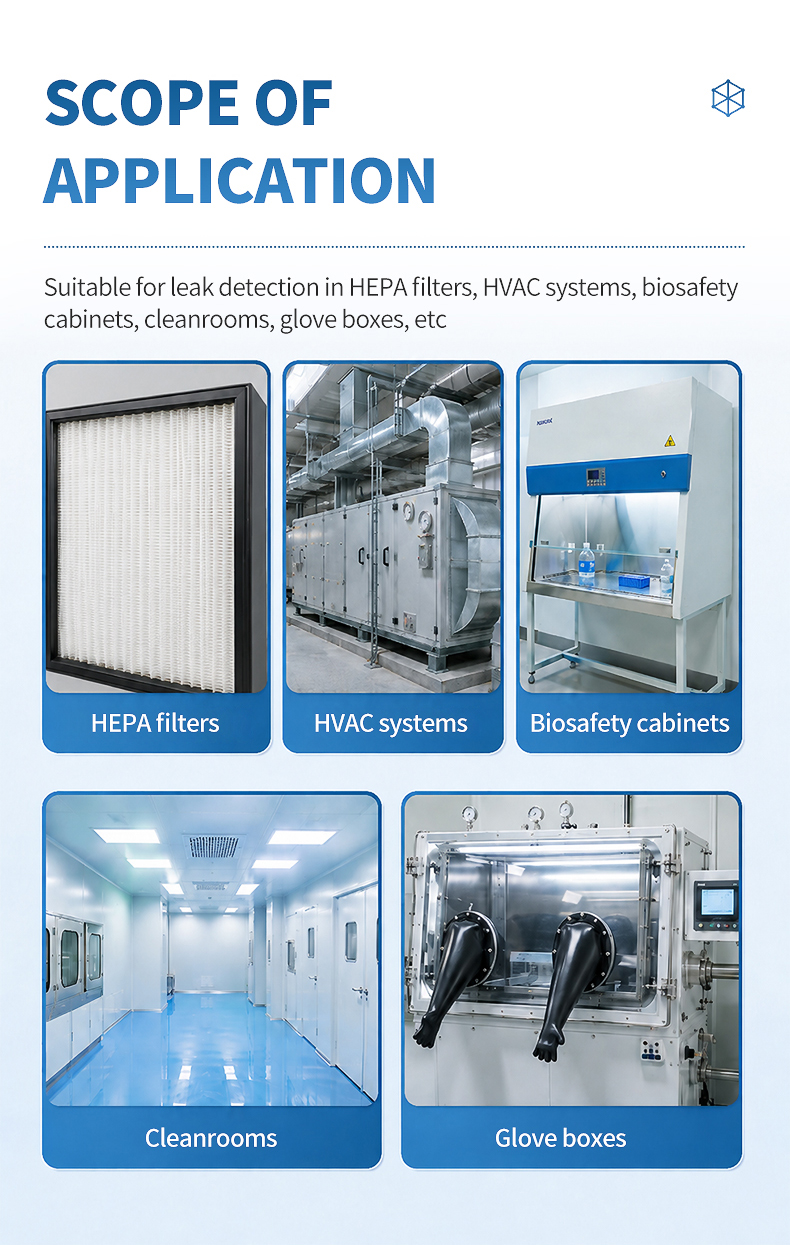
Pharmaceutical cleanrooms. HEPA integrity testing under EU GMP Annex 1 and FDA sterile processing guidance. Grade A/B filling suites, sterility test isolators and gowning rooms.
Semiconductor fabrication. ULPA filter verification in ISO Class 1–5 cleanrooms. Fan filter unit (FFU) scanning during fab commissioning and periodic requalification.
Hospital engineering. Operating theatre HVAC, isolation room negative-pressure suites, pharmacy compounding areas and biological safety cabinets under NSF/ANSI 49.
Nuclear facilities. HEPA filter banks in ventilation systems subject to ASME AG-1 and DOE-STD-3020. Annual revalidation after maintenance.
Food and beverage aseptic processing. HEPA-filtered supply air verification in UHT filling lines, yoghurt production and juice packaging clean zones under HACCP.
Key Features & Advantages
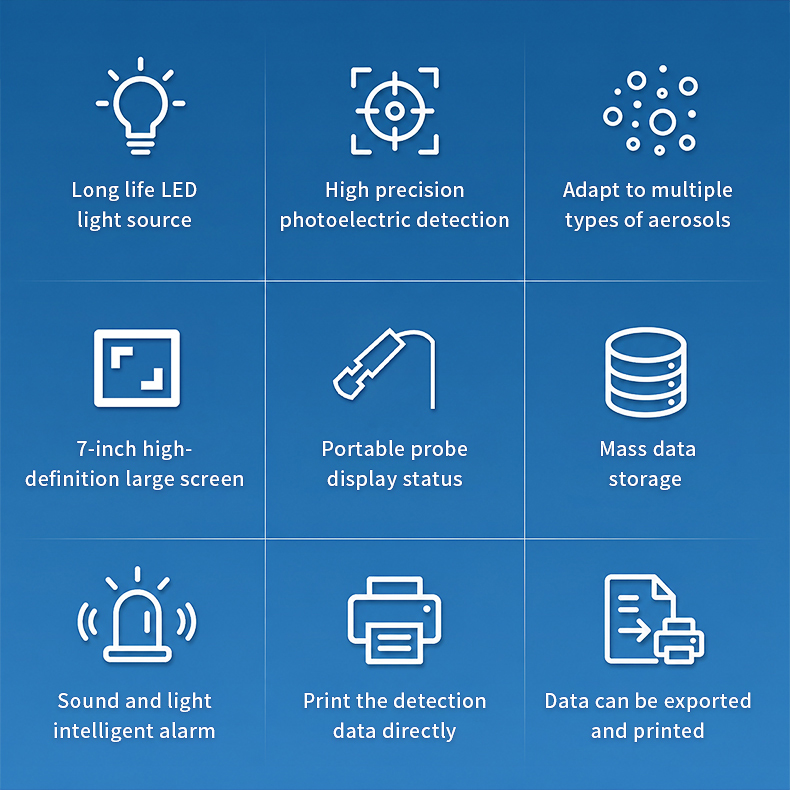
Mie light scattering detection. Proven optical architecture used by international benchmark brands, ensuring measurement credibility with auditors.
0.0001% lower detection limit. Resolves leak thresholds for both HEPA (0.01%) and ULPA (0.001%) filters, covering the full compliance spectrum.
Long-life solid-state LED. Exceeds 20,000 hours operational life; no expensive laser-module replacements.
High-precision PMT detector. Stable baseline and low noise floor, critical for detecting marginal leaks near the 0.01% threshold.
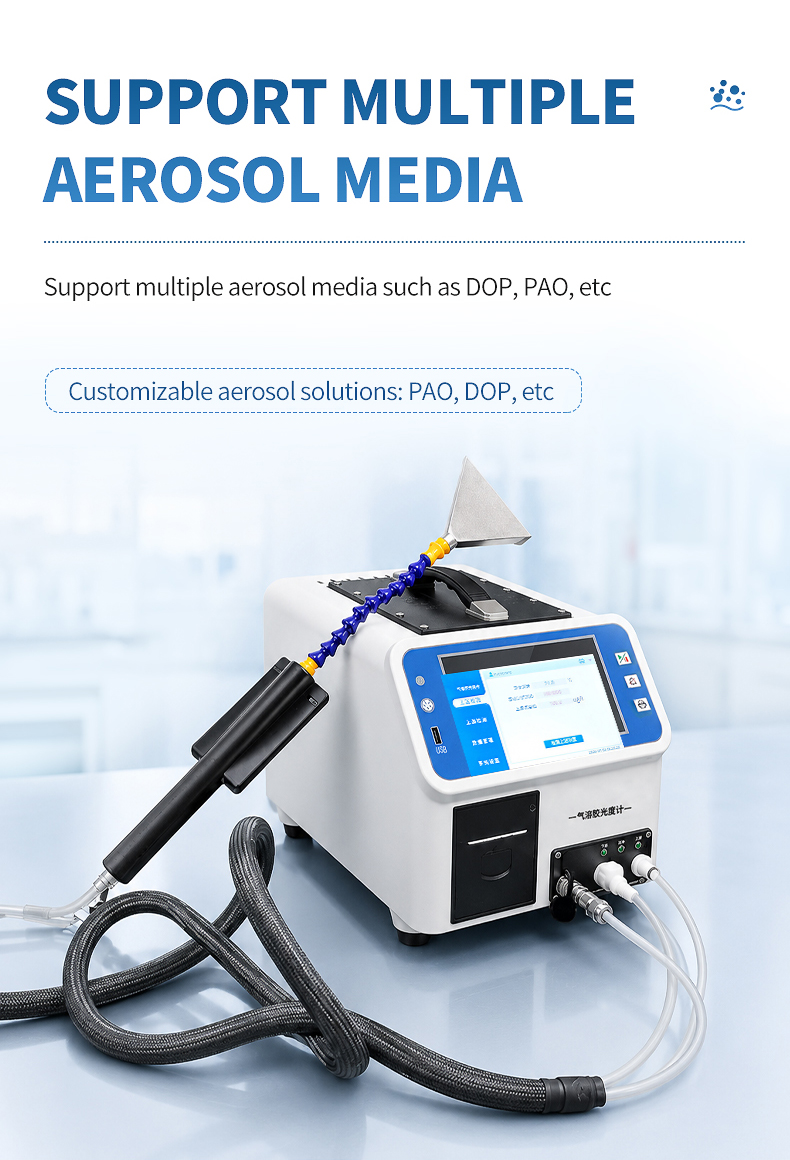
PAO and DOP compatible. Switch between challenge media to match facility SOPs without instrument limitations.
7-inch LCD touch screen. Real-time concentration, leak rate and flow-rate display; intuitive menu reduces technician training time.
Automatic zero calibration. Baseline established in seconds on every startup, maintaining day-to-day measurement stability between formal calibrations.
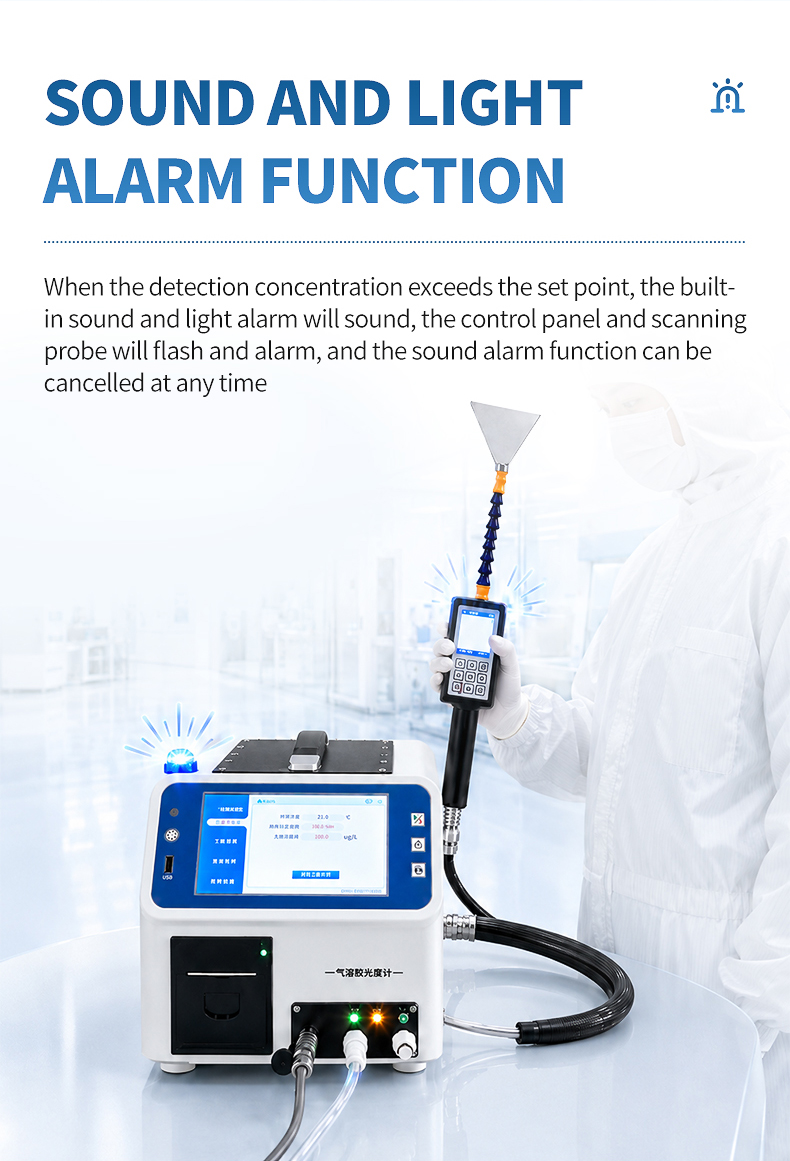
Silenceable audible alarm. Visual flashing alarm continues even when sound is muted — ideal for hospital patient areas and quiet cleanroom zones.
Continuous, storage and print modes. Three reporting formats cover real-time monitoring, batch documentation and hard-copy compliance records.
USB data export. Test records transfer directly to validation folders, LIMS systems or audit packages without manual transcription.
Standard 28.3 L/min flow rate.Matches ISO 14644-3 and IEST-RP-CC034 scanning specifications.
Portable 10 kg main unit + 0.5 kg probe. Single-operator deployment across multiple cleanroom suites, floors or buildings.
10-year parts supply commitment. HM Instruments guarantees spare parts for at least a decade post-discontinuation.
280 service points nationwide. 4-hour response in capital cities, 8-hour in prefecture-level cities, 24-hour hotline.
Blockchain-notarised certificates. ISO 9001 and other qualifications verifiable on the Zhixin chain for procurement audits.
Technical Specifications
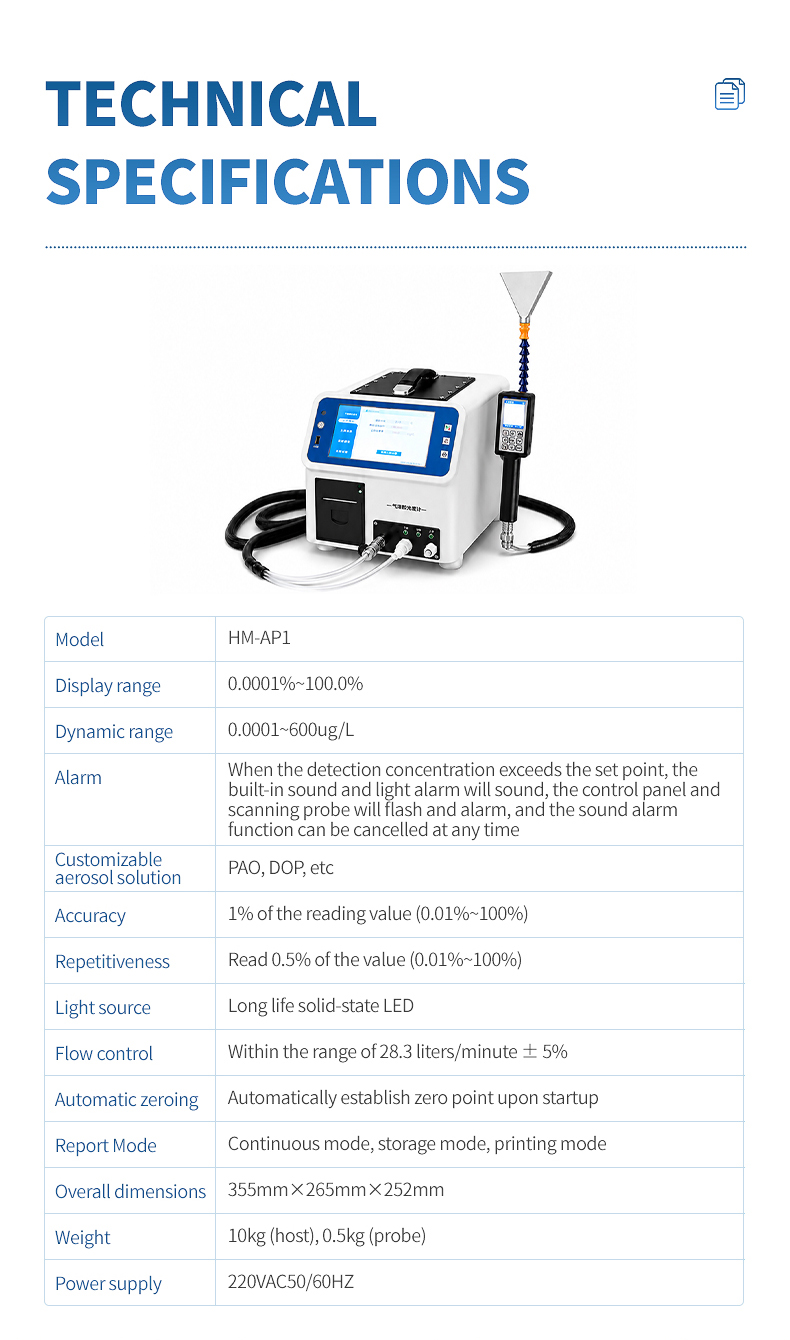
| Parameter | Specification |
|---|
| Detection principle | Mie light scattering |
| Light source | Long-life solid-state LED |
| Detector | High-precision photomultiplier tube (PMT) |
| Display range | 0.0001%–100.0% |
| Dynamic range | 0.0001–600 µg/L |
| Accuracy | ±1% of reading (0.01%–100%) |
| Repeatability | ±0.5% of reading (0.01%–100%) |
| Flow rate | 28.3 L/min ±5% |
| Aerosol media | PAO, DOP and others |
| Alarm | Built-in audible and visual alarm; audible silencable |
| Report modes | Continuous, storage, print |
| Data output | Local storage, USB transfer, direct printing |
| Display | 7-inch LCD touch screen |
| Auto zero | Automatic on startup |
| Dimensions | 355 × 265 × 252 mm |
| Weight | 10 kg (main unit), 0.5 kg (probe) |
| Power supply | 220 VAC, 50/60 Hz |
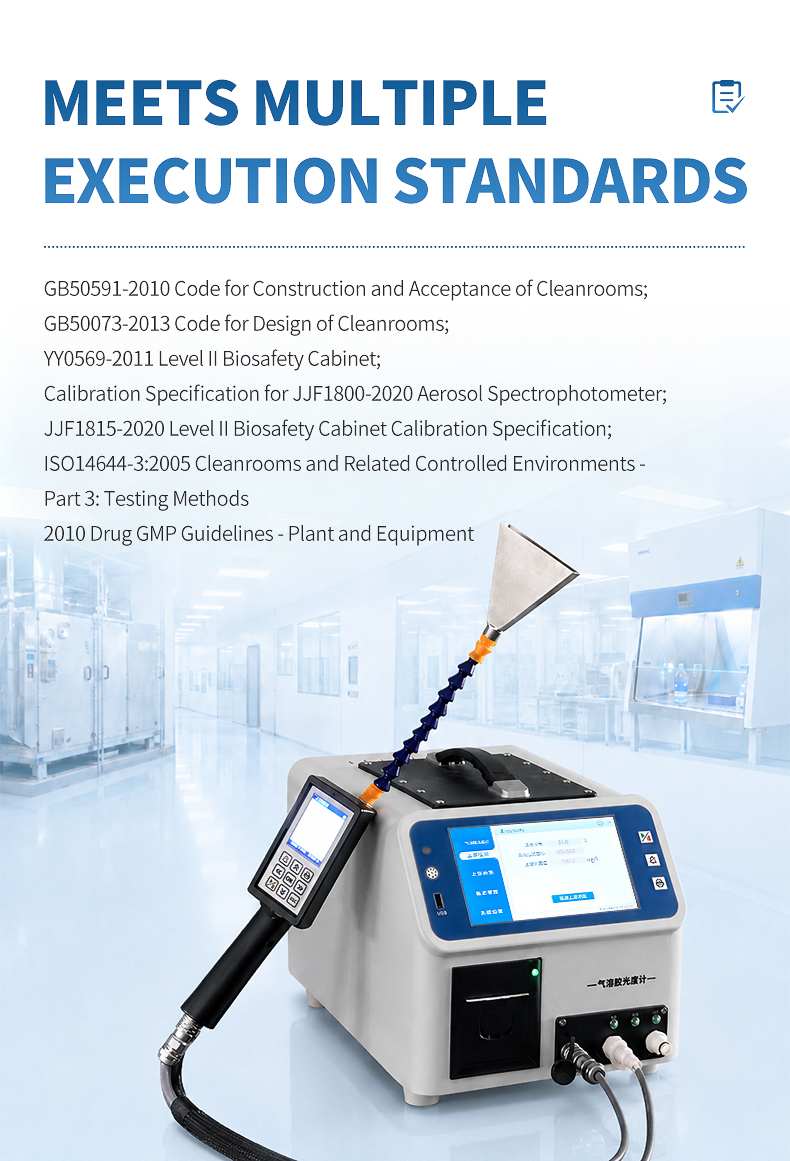
| Standards | ISO 14644-3:2005, GB 50591-2010, GB 50073-2013, YY 0569-2011, JJF 1800-2020, JJF 1815-2020 |
FAQ
Q1: Can the HM-AP1 replace outsourced HEPA filter testing services entirely?
For standard ISO 14644-3 and EU GMP Annex 1 filter integrity testing, yes. The HM-AP1 delivers the same detection principle, flow rate and sensitivity as instruments used by contracted validation teams. Facilities must still ensure their technicians are trained on scanning technique and that the photometer is calibrated annually against traceable standards. The primary advantage is schedule control and long-term cost reduction.
Q2: How does the HM-AP1 compare with ATI or TSI aerosol photometers?
The HM-AP1 uses the same Mie scattering + PMT architecture and achieves comparable accuracy (±1% of reading). International brands retain advantages in advanced features such as multi-channel scanning, integrated aerosol generators and global calibration lab networks. For single-probe HEPA/ULPA integrity testing — the most common cleanroom validation task — the HM-AP1 delivers equivalent technical performance at roughly 20–40% of the price.
Q3: Is PAO or DOP better for filter testing?
PAO (poly-alpha olefin) has replaced DOP in most modern facilities due to health and environmental concerns around phthalate compounds. Both produce a polydisperse aerosol with mass median diameter around 0.3–0.5 µm when properly nebulised. The HM-AP1 supports both media, allowing users to follow existing facility SOPs during transition periods.
Q4: What is the payback period versus outsourced testing?
Assuming 4 validation campaigns per year at $1,000–$1,500 per campaign (including travel), the HM-AP1 ($5,900) pays for itself in approximately 6–8 campaigns (18–24 months). Over three years, in-house ownership with HM-AP1 is typically 60–70% cheaper than recurring outsourced services.
Q5: Can one HM-AP1 serve multiple buildings or sites?
Yes. At 10 kg for the main unit and 0.5 kg for the detachable probe, the instrument is designed for portable deployment. A single unit can rotate between cleanroom suites, building floors or separate sites during scheduled validation windows. For high-frequency testing, dedicated units per site are recommended.
Q6: Does HM Instruments provide calibration services?
HM Instruments operates 280 service points across China and offers annual calibration verification against traceable aerosol concentration standards. Calibration certificates are provided for audit documentation. For international customers, service is arranged through authorised distributor partners.
Q7: What happens if the LED light source fails?
LED lifetime in this application class exceeds 20,000–50,000 hours. Under normal use (several validation campaigns per year), the LED should not require replacement during the instrument's service life. HM Instruments guarantees parts supply for at least 10 years after product discontinuation.
Article address:
https://www.environmentinstrum.com/aerosol-photometer/cleanroom-hepa-filter-leak-detector.html
- Previous: no more
- Next: no more



 +86 17853698681