



Product Center
- Negative oxygen ion detector
- Dust particle counter
- Air Bacteria Sampler
- Biological aerosol detector
- Infrared CO/CO2 analyzer
- Microbial Air Monitoring Systems
- Microbial aerosol concentrator
- Environmental air comprehensive sampler
- Mercury meter
- Trace sulfur analyzer
- Bacterial Collector
- Quantitative sampling robot
- Emanometer
- Microbial limit tester
- Radioactive Aerosol Monitor
- Aerosol Photometer
Sterility Testing Pump Industry Application White Paper
Source:Hengmei Environmental Sanitation Instrument Network Update time:2026-06-15 13:36:44
Sterility Testing Pump Industry Application White Paper: Multi-Sector Analysis by HM Instruments
Sterility testing pumps based on membrane filtration methodology have become indispensable across multiple industries where product safety depends on the absence of microbial contamination. From injectable drug manufacturing to food quality assurance and environmental surveillance, these instruments serve as the mechanical backbone of microbiological testing workflows. This white paper by HM Instruments provides an in-depth analysis of how sterility testing pumps are applied across four major industry sectors, examining the specific testing requirements, regulatory frameworks, and operational challenges unique to each domain.
Pharmaceutical Industry Applications
Sterility Testing of Injectable Drug Products
The pharmaceutical industry represents the most demanding application environment for sterility testing pumps. Injectable drug products, including small-molecule solutions, biologics, and vaccines, must demonstrate complete absence of viable microorganisms before release to patients. Membrane filtration is the pharmacopeial method of choice for filterable products, requiring a sterility testing pump to draw the product through a 0.45-micrometer membrane filter that traps any potential microbial contaminants.
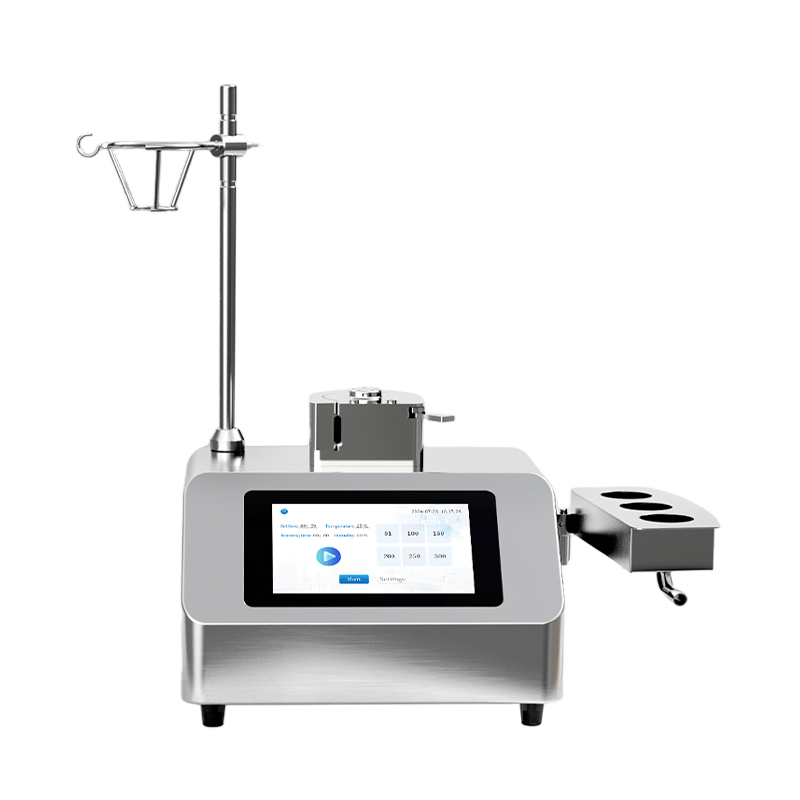
HM Instruments' sterility testing pumps address pharmaceutical testing needs through several design features. The adjustable speed range of 1 to 300 rpm allows operators to process different product viscosities without compromising filter integrity. The 6 preset speed settings enable standardized protocols across multiple testing stations, ensuring method consistency. The L304 stainless steel integrated shell provides a surface compatible with GMP cleaning and disinfection requirements, while the absence of dead corners prevents cross-contamination between test samples. The HM-JJ2 model's built-in temperature and humidity display supports the environmental monitoring documentation that GMP auditors routinely examine during facility inspections.
Biologics and Biopharmaceutical Testing
Biologics present unique challenges for sterility testing due to their higher viscosity, larger volumes, and sensitivity to shear forces. The peristaltic pumping mechanism of HM Instruments' sterility testing pumps provides gentle, low-shear fluid handling that preserves the integrity of sensitive biological products during the filtration process. The variable speed control allows operators to start with a low flow rate to wet the membrane and gradually increase speed for efficient sample processing, a technique commonly recommended for biologic product testing.
Traditional Chinese Medicine and Herbal Preparations
Traditional Chinese medicine (TCM) injections and herbal preparations often contain particulate matter and complex matrices that can challenge filtration. The wide speed range of HM Instruments' pumps, combined with the drainage tank and universal bottle holder accessories, allows laboratories to process these challenging samples effectively. The split drainage bracket design facilitates easy cleaning between test runs, which is particularly important when processing samples with residues that could cross-contaminate subsequent tests.
Medical Device Industry Applications
Sterility Testing of Implantable Devices
Implantable medical devices, from orthopedic implants to cardiovascular stents, must undergo rigorous sterility testing before clinical use. For devices that can be immersed in fluid, membrane filtration with a sterility testing pump provides a sensitive method for detecting microbial contamination on device surfaces. The 340mm suspension height of HM Instruments' pumps accommodates the filtration assemblies used for medical device testing, including the fluid rinse volumes needed to extract potential contaminants from complex device geometries.
In Vitro Diagnostic Product Testing
In vitro diagnostic (IVD) products, including reagent kits and test devices, require sterility assurance for liquid components. The precise speed control of HM Instruments' sterility testing pumps enables laboratories to process IVD product samples with the consistency needed for regulatory submissions. The 5-inch touchscreen on the HM-JJ1 provides an intuitive interface for technicians, while the 7-inch display on the HM-JJ2 offers enhanced visibility of speed and status information in busy testing environments.
Food and Beverage Industry Applications
Dairy Product Microbial Limit Testing
The food and beverage industry uses membrane filtration-based microbial limit testing to assess the microbiological quality of liquid products. Dairy products including milk, cream, and juice concentrates can be processed through membrane filters using sterility testing pumps to enumerate coliforms, yeast, mold, and total aerobic microorganisms. The plastic pump head option on the HM-JJ1 provides a cost-effective solution for food testing laboratories with moderate sample throughput, while the stainless steel pump head on the HM-JJ2 offers the durability needed for high-volume testing operations.
Beverage and Bottled Water Testing
Bottled water and beverage manufacturers rely on membrane filtration methods to verify the microbiological safety of their products. The ability to process large sample volumes efficiently is critical in this sector. HM Instruments' pumps with their 1 to 300 rpm speed range and 6 preset speed settings allow food testing laboratories to develop standardized testing protocols that meet national food safety standards. The foot switch accessory enables hands-free operation, improving throughput in high-volume testing environments.
Food Additive and Ingredient Testing
Food additives, preservatives, and functional ingredients require microbiological quality assessment before incorporation into food products. Many of these materials are soluble in aqueous media and can be tested using membrane filtration with a sterility testing pump. The compact footprint of HM Instruments' pumps (420 x 536 x 267 mm) allows them to be integrated into food testing laboratories where bench space may be limited.
Environmental Monitoring Applications
Water Quality Microbiological Testing
Environmental monitoring of water sources for microbiological contamination is another significant application for sterility testing pumps. Drinking water, recreational water, and industrial process water are routinely tested for indicator organisms and pathogens using membrane filtration methods. The HM-JJ2 model's built-in temperature and humidity display is particularly valuable in environmental testing laboratories where monitoring ambient conditions during sample processing is a regulatory or quality system requirement.
Pharmaceutical Cleanroom Environmental Monitoring
In pharmaceutical manufacturing facilities, environmental monitoring of cleanrooms and controlled areas is a GMP requirement. Settle plates, contact plates, and active air samplers are used alongside membrane filtration methods for water system monitoring. HM Instruments' sterility testing pumps can process purified water and water for injection samples from pharmaceutical water systems, with the L304 stainless steel shell providing compatibility with the cleanroom environment where these tests are performed.
Cosmetic Product Testing
Cosmetic products, particularly those applied around the eyes or on mucous membranes, require microbiological quality testing. Water-based cosmetics can be tested using membrane filtration with sterility testing pumps, providing a quantitative assessment of microbial content. The ease of cleaning and disinfection of HM Instruments' stainless steel shell design simplifies the transition between different product types, reducing the risk of carryover contamination.
Cross-Industry Technical Considerations
| Parameter | Pharmaceutical | Medical Devices | Food and Beverage | Environmental |
|---|---|---|---|---|
| Primary Test Type | Sterility (USP 71, EP 2.6.1) | Sterility (ISO 11737) | Microbial limits (GB 4789) | Indicator organisms |
| Typical Sample Volume | 10 mL to full container | 100 to 500 mL rinse | 1 mL to 100 mL | 100 mL to 1000 mL |
| Recommended Speed | 80 to 150 rpm | 50 to 120 rpm | 60 to 200 rpm | 100 to 250 rpm |
| Preferred Model | HM-JJ2 (stainless steel head) | HM-JJ2 (monitoring display) | HM-JJ1 (cost-effective) | HM-JJ2 (environmental display) |
| Key Requirement | GMP compliance | ISO compliance | Throughput efficiency | Ambient monitoring |
Implementation Recommendations by Industry
For Pharmaceutical Laboratories
Select the HM-JJ2 model with stainless steel pump head for its chemical resistance, built-in environmental monitoring, and 7-inch touchscreen for detailed parameter display. Ensure the instrument is qualified (IQ/OQ) before routine use and maintain a calibration schedule aligned with your GMP quality system requirements.
For Medical Device Testing Laboratories
The HM-JJ2 is recommended for its environmental monitoring capability, which supports the documentation requirements of ISO 11737 testing. The stainless steel pump head withstands repeated sterilization cycles needed for multi-product testing environments.
For Food Testing Laboratories
The HM-JJ1 with plastic pump head provides a cost-effective entry point for laboratories performing routine microbial limit testing. The 5-inch touchscreen and 6 preset speed settings simplify operation for technicians who may test multiple product types throughout the day.
For Environmental Testing Laboratories
The HM-JJ2's built-in temperature and humidity display eliminates the need for a separate environmental monitoring instrument at the testing workstation, streamlining the documentation process and reducing bench space requirements.
Regulatory Landscape and Evolving Requirements
The regulatory environment for sterility testing continues to evolve, with implications for equipment selection across all industry sectors. The harmonization efforts between USP, EP, and JP sterility testing chapters are gradually aligning method requirements, which benefits laboratories using membrane filtration by creating more consistent operational expectations across different regulatory jurisdictions. At the same time, increasing emphasis on data integrity and process documentation under Annex 1 of the EU GMP guidelines and FDA guidance documents has elevated the importance of environmental monitoring during sterility testing operations.
This regulatory trend directly supports the value proposition of the HM-JJ2 model's built-in temperature and humidity display, which integrates environmental monitoring into the sterility testing workflow without requiring a separate instrument. As regulatory auditors increasingly expect documented evidence of environmental conditions during testing, having this data captured at the point of testing represents a practical compliance advantage. The touchscreen interface on both models also supports data integrity requirements by providing a clear, unambiguous display of operational parameters that operators can verify and document during testing.
For laboratories in China, the Chinese Pharmacopoeia Commission's ongoing updates to sterility testing chapters continue to refine method requirements and acceptance criteria. HM Instruments maintains active engagement with these evolving standards, ensuring that their sterility testing pump designs remain aligned with current and anticipated regulatory expectations. The company's ISO 9001 certified quality management system provides the framework for incorporating regulatory changes into product design and manufacturing processes in a timely manner. Additionally, the nationwide service network of 280 outlets ensures that any instrument updates or modifications required by regulatory changes can be implemented quickly across the installed base, minimizing compliance gaps.
Conclusion
Sterility testing pumps serve critical functions across pharmaceutical, medical device, food safety, and environmental monitoring industries. Each sector presents unique testing requirements that influence instrument selection, operational protocols, and regulatory compliance approaches. HM Instruments' dual-model strategy addresses these diverse needs through the HM-JJ1 for cost-sensitive applications and the HM-JJ2 for environments requiring enhanced material specifications and environmental monitoring. With L304 stainless steel construction, a 1 to 300 rpm speed range, and a nationwide 280-outlet service network, HM Instruments provides sterility testing pump solutions that meet the operational and regulatory demands of each industry sector while positioning laboratories for compliance with evolving global standards.
Article address:https://www.environmentinstrum.com/industry/sterility-testing-pump-industry-application-whitepaper.html
- Related products
- Related articles

-
06-15 2026
Sterility Testing Pump Industry Application White Paper
Explore sterility testing pump applications in pharma, medical devices, food safety, and environment···...
-
05-08 2026
HengMei X/γRadiation Detector Procurement Guide
1. Pre-Procurement Needs AssessmentBefore purchasing X/γ radiation detectors, evaluate actual needs ···...
-
10-24 2025
Intelligent Microbial Collection Instrument: For Sterility Testing in Pharma and Medical Devices
As a supporting equipment for disposable fully enclosed bacterial culture equipment, the intelligent···...
-
07-31 2025
Infrared carbon dioxide analyzer: the technological guardian of air quality
Why is precise monitoring of carbon dioxide necessary?Today, with the increasing attention to carbon···...