



Product Center
- Negative oxygen ion detector
- Dust particle counter
- Air Bacteria Sampler
- Biological aerosol detector
- Infrared CO/CO2 analyzer
- Microbial Air Monitoring Systems
- Microbial aerosol concentrator
- Environmental air comprehensive sampler
- Mercury meter
- Trace sulfur analyzer
- Bacterial Collector
- Quantitative sampling robot
- Emanometer
- Microbial limit tester
- Radioactive Aerosol Monitor
- Aerosol Photometer
- Aerosol Generator
- Handheld VOC Detector
- Laser Methane Detector
Making Comparable Negative Air Ion Measurements
Source:Hengmei Environmental Sanitation Instrument Network Update time:2026-11-13 13:27:35
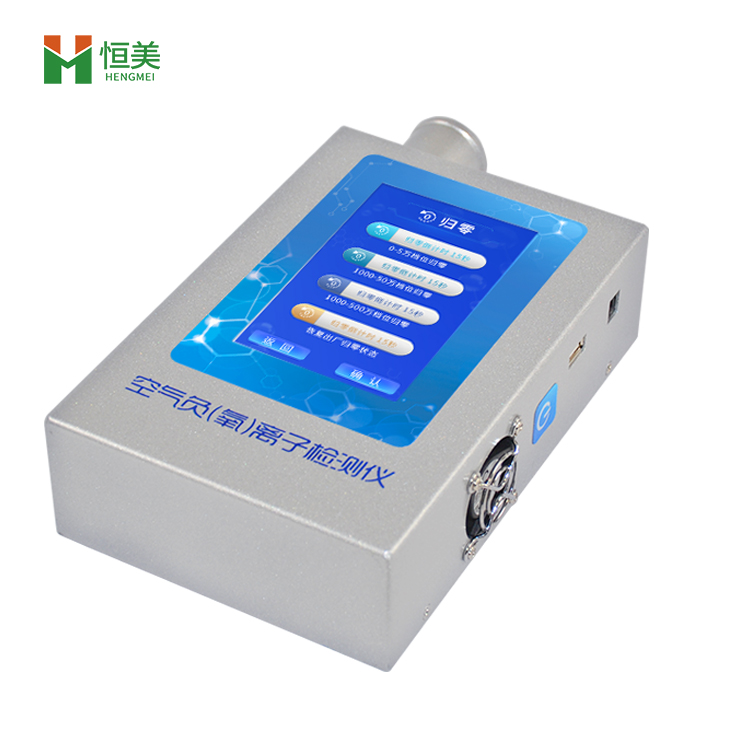
For comparable negative air ion readings, keep the inlet arrangement and sampling conditions consistent. HM-FY2 collects charge from ions passing through a cylindrical capacitive sensor under a defined electric field. Record the measurement setting and location with each result.
A practical measurement workflow
- Choose the location and record surrounding equipment and airflow conditions.
- Set up the detector with its inlet unobstructed according to the instrument instructions.
- Use a consistent measurement sequence and retain repeated readings with their timestamps.
- Report the concentration setting and measurement conditions together with the numerical result.
How the measurement works
In the manufacturer-described method, air passes through a sensor with a polarization voltage. Ions within the collection conditions deposit charge on the collecting electrode, and the instrument calculates concentration. The stated mobility range is part of the measurement definition. Changes in airflow, surroundings and collection conditions can affect comparisons.
Manufacturer-listed configuration
The HM-FY2 from HM Instruments provides the example configuration in this guide.
| Item | Listed specification |
|---|---|
| Measurement method | Cylindrical capacitive air intake |
| Mobility range | 0.4–1.0 cm²/(V·s) |
| Result refresh | Once per second |
Interpreting the result
The reading describes ions collected under the instrument measurement conditions. A concentration result does not by itself establish a health benefit or identify the chemical composition of every collected ion.
Common questions
Why can two detectors show different values?
Compare the measurement principle, ion mobility selection, concentration setting, location and sampling conditions.
What makes a useful field record?
Retain the time, location, instrument setting, surrounding conditions and repeated readings.
Retain the sample identity, method settings and control results with the reported measurement. Use the operating procedure supplied for the selected configuration.
Article address:https://www.environmentinstrum.com/news/making-comparable-negative-air-ion-measurements.html
- Previous: Sterility Testing Pump Cost-Performance Review
- Next: no more
- Related products
- Related articles


-
07-31 2025
Analysis and Application of Handheld Laser Particle Counter Technology
In the field of modern industry and technology, air cleanliness is no longer an optional standard, b···...
-
05-08 2026
HengMei X/γRadiation Detector Procurement Guide
1. Pre-Procurement Needs AssessmentBefore purchasing X/γ radiation detectors, evaluate actual needs ···...
-
10-24 2025
Microbial Limit Detector: Simplifying QC for Product Safety and GMP Compliance
Microbial limit testing is a core component of quality control in industries such as pharmaceuticals···...
-
05-28 2026
Aerosol Photometer Industry Application White Paper — HM Instruments HM-AP1
Industry application white paper for aerosol photometers: HEPA filter leak testing in pharma, semico···...