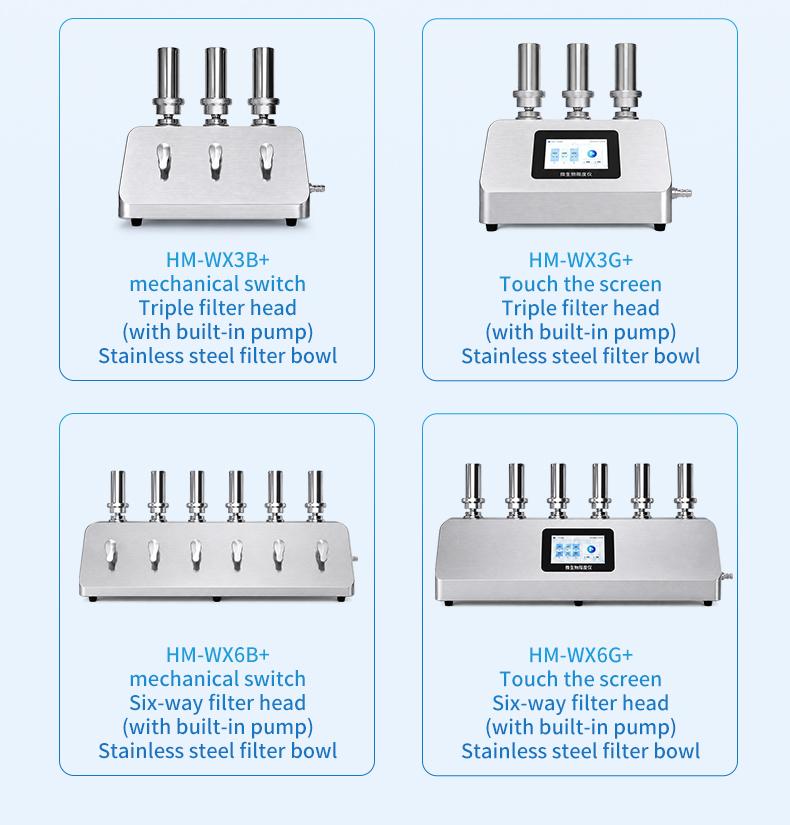
Product Introduction
Pharmaceutical quality control laboratories performing microbiological limit testing face a persistent operational challenge: each membrane filtration test requires a sterile filter cup, and disposable cups generate ongoing consumable expenses that accumulate significantly across daily testing schedules. For a GMP facility testing purified water and water for injection at multiple sampling points, the cost of disposable Ø47mm filter cups can reach thousands of dollars annually. Moreover, supply chain disruptions can delay testing schedules when cup inventories run low. Laboratories need a filtration system that maintains validated sterility assurance while reducing reliance on single-use consumables.
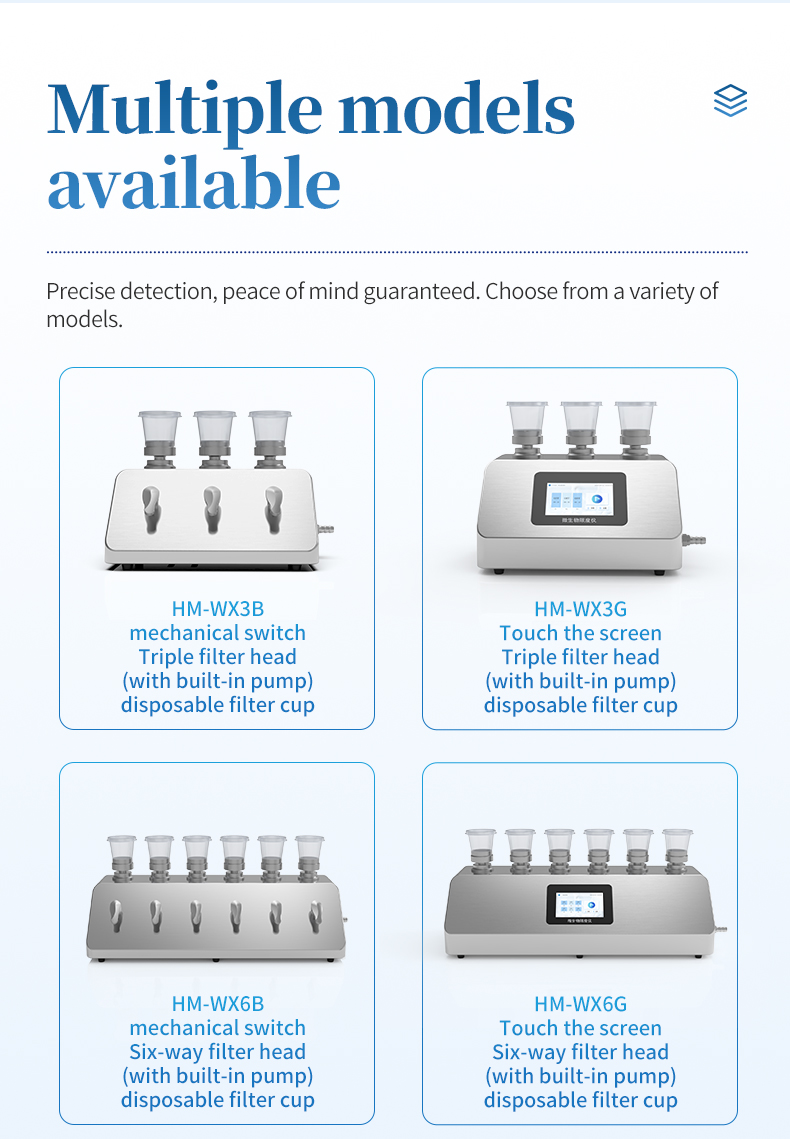
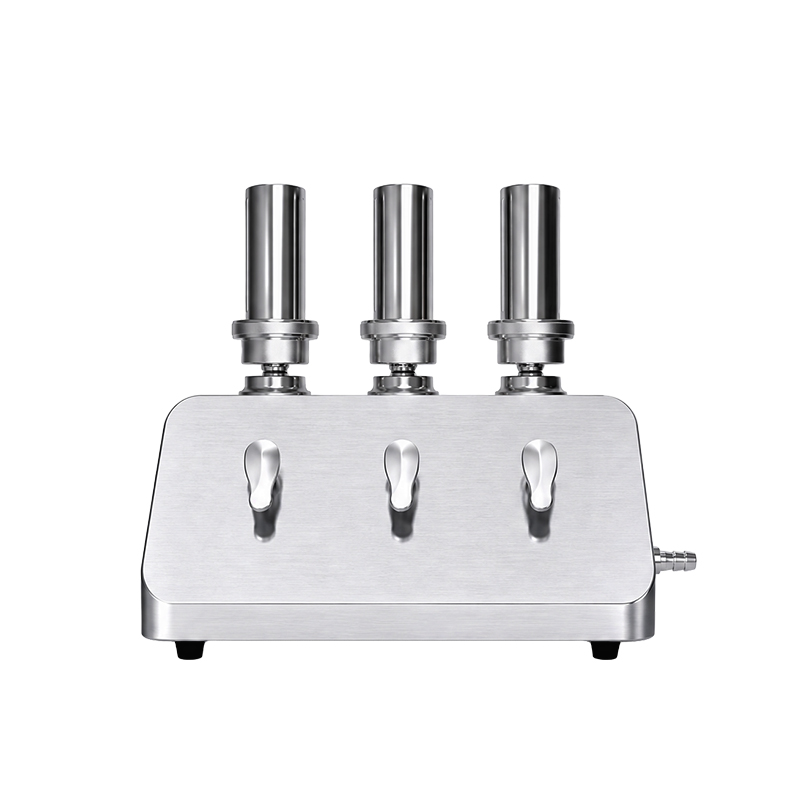
The HM-WX3B+ addresses this challenge directly by equipping each of its three filtration channels with Ø47mm/Ø50mm stainless steel filter cups rated for repeated autoclave sterilization cycles. After each test, the stainless cups are simply transferred to a standard autoclave for high-pressure steam sterilization, then returned to the instrument for the next sample — no consumable cup procurement, no inventory management, and no waste disposal. Over the service life of the instrument, the cost savings from eliminating disposable cups can substantially exceed the initial purchase price of the system itself.
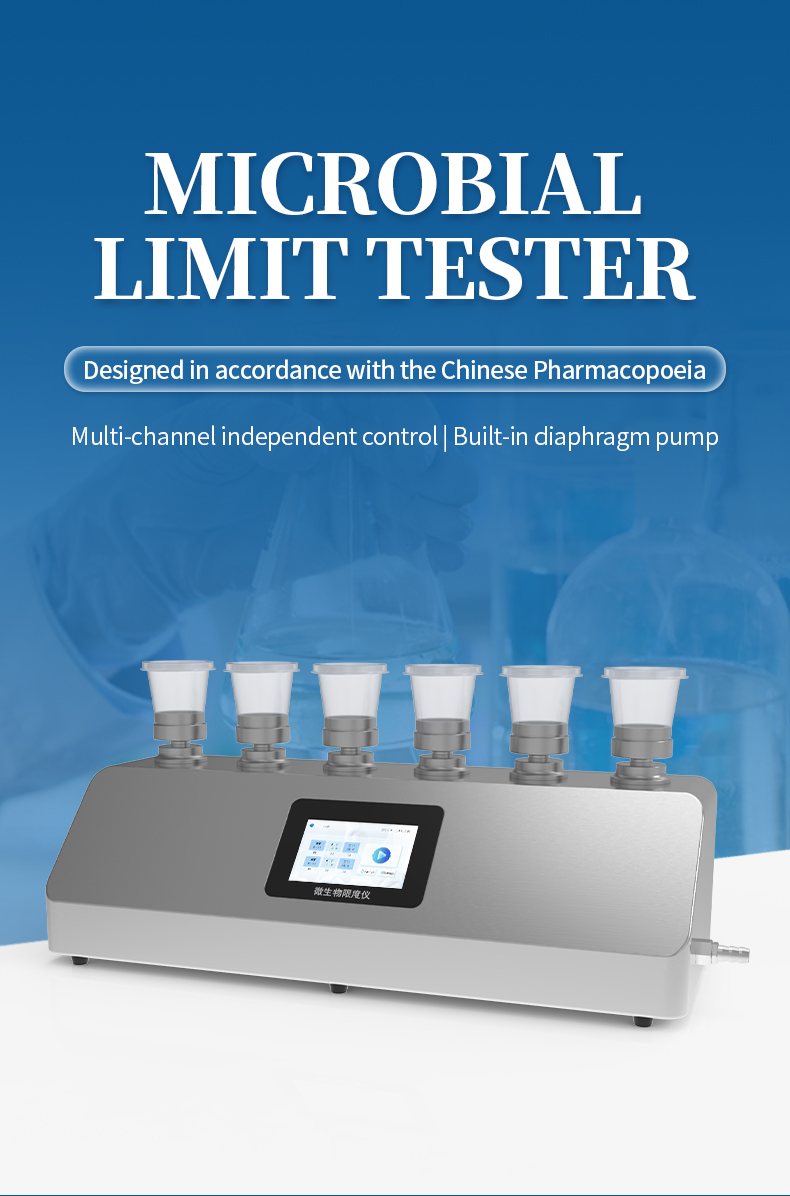
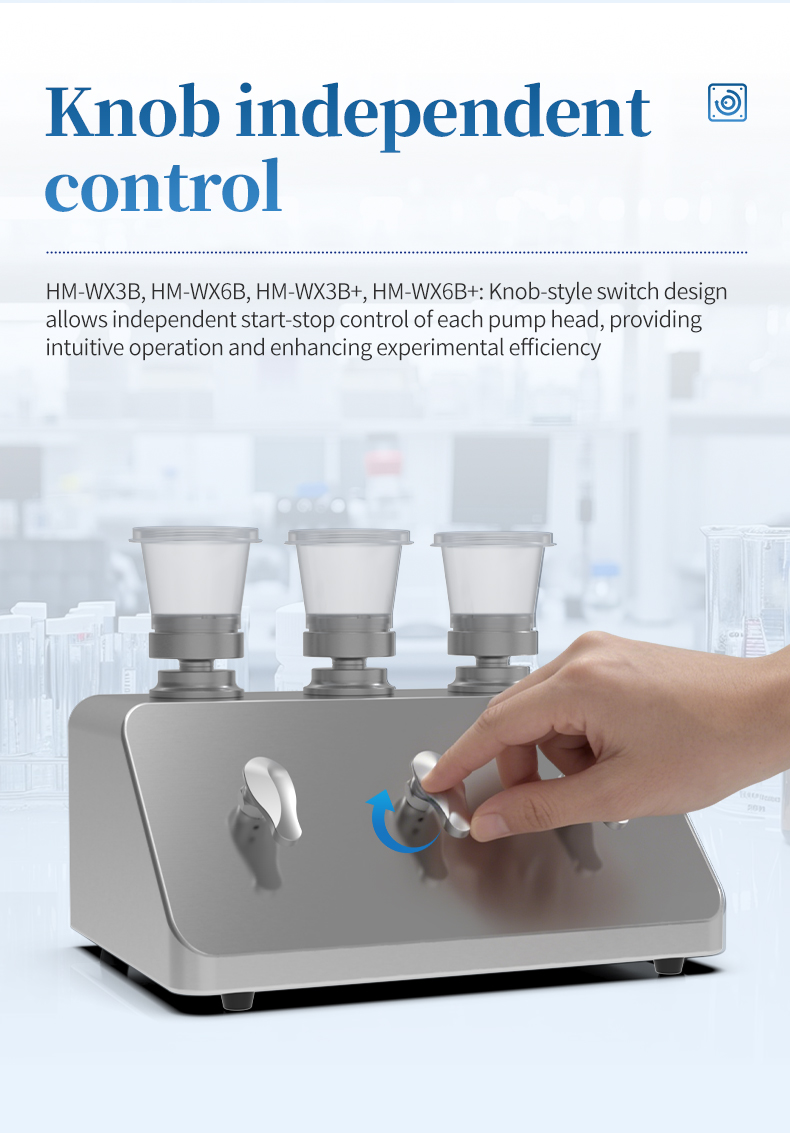
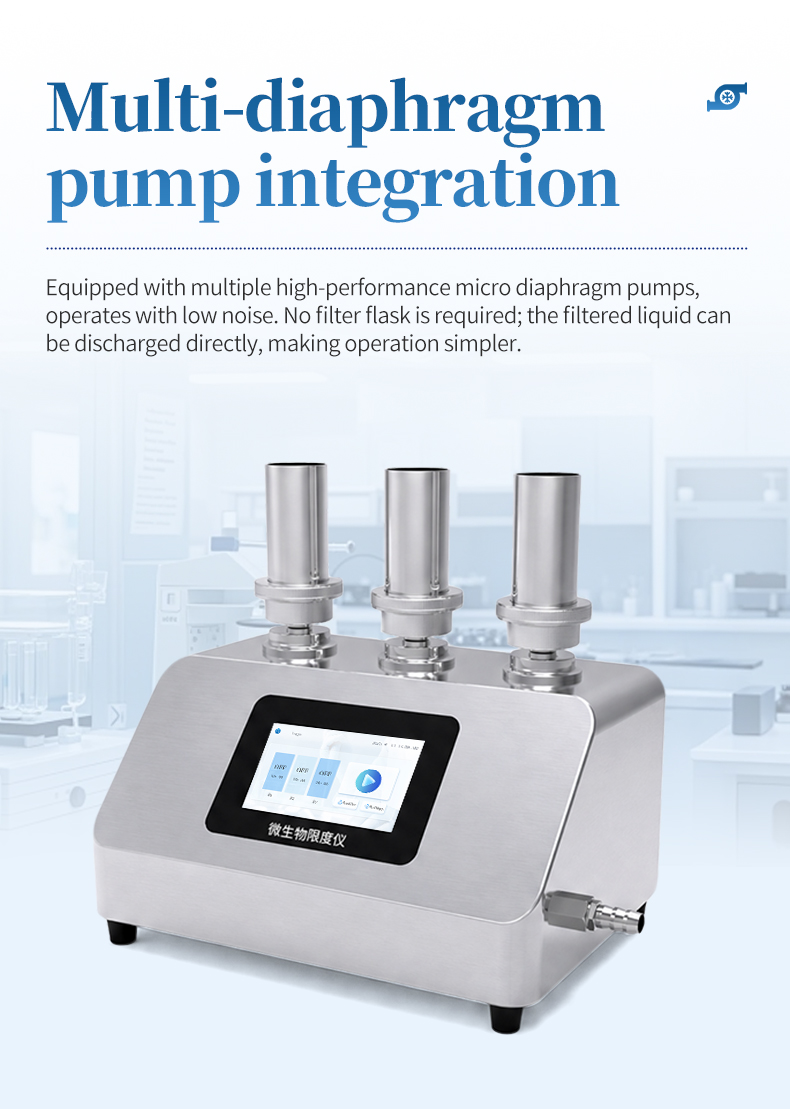
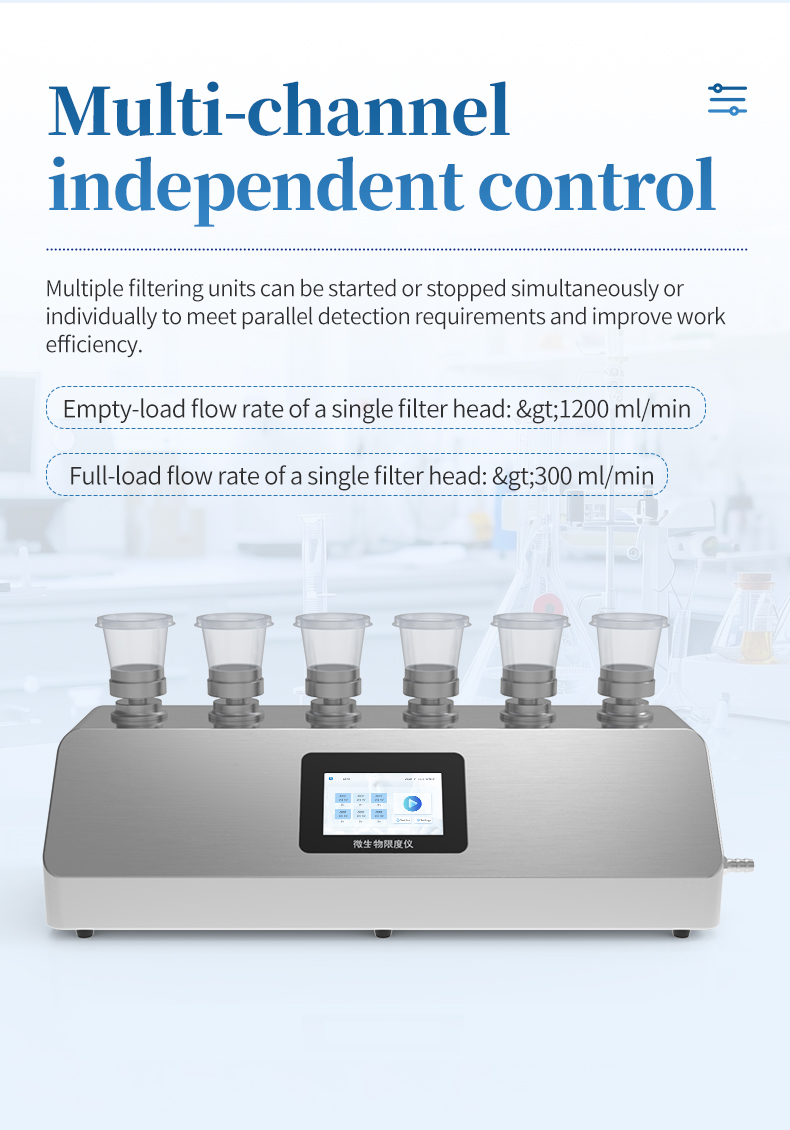
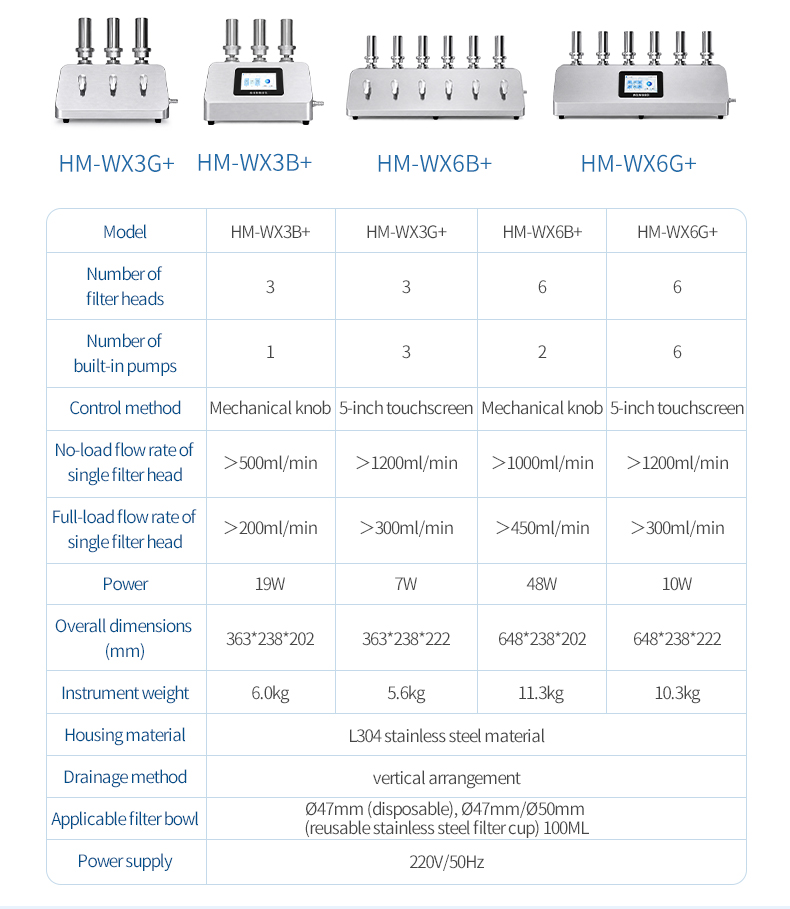
Built around two high-performance diaphragm pumps with direct discharge capability, the HM-WX3B+ eliminates the need for external vacuum flasks and their associated cleaning and validation burden. The L304 stainless steel housing provides a corrosion-resistant, easy-to-decontaminate enclosure suitable for cleanroom bench-top installation. Mechanical knob switches allow independent channel control, supporting both simultaneous parallel filtration and sequential single-sample processing. With a single filter head flow rate exceeding 1000 ml/min under no-load conditions and 450 ml/min under full load, the system efficiently processes routine pharmaceutical water samples within standard test protocol timeframes.
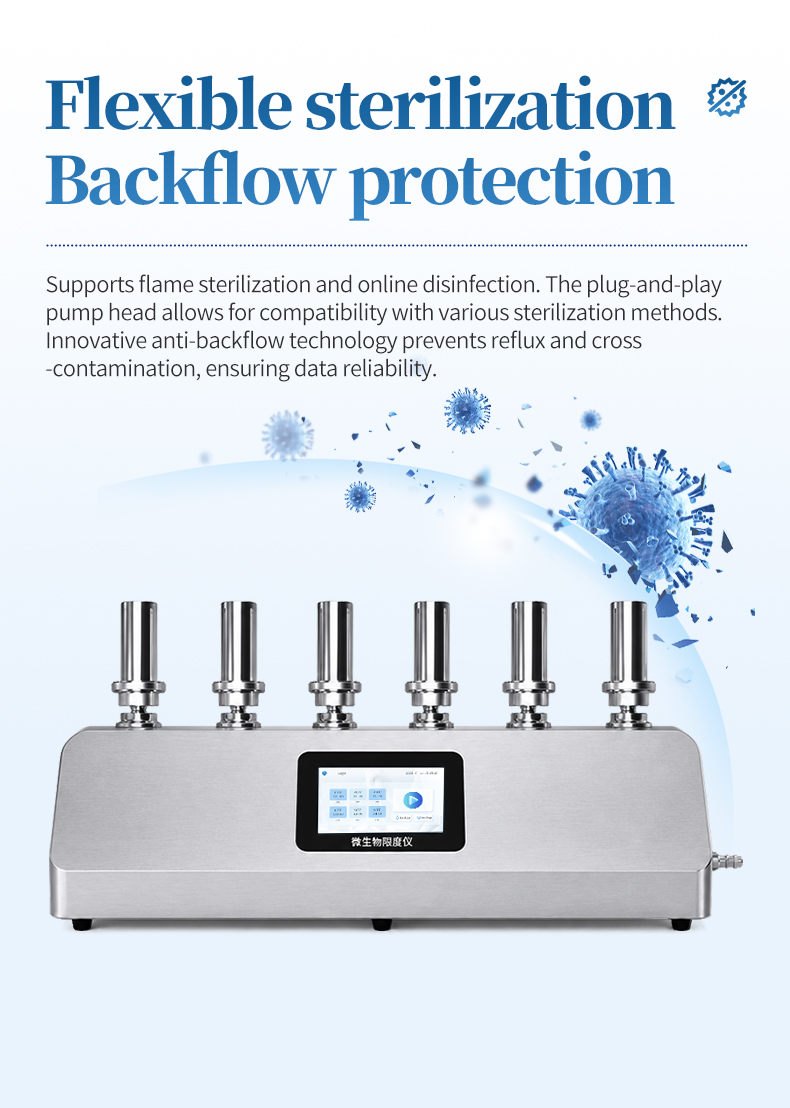
The filter heads are compatible with flame sterilization using a Bunsen burner between consecutive samples, and the stainless steel cups support standard 121°C autoclave cycles for validated sterilization. Anti-backflow protection prevents sample cross-contamination, and the modular filter assembly design facilitates quick disassembly for thorough cleaning and reassembly. At 363 × 238 × 202 mm and 6.0 kg, the HM-WX3B+ fits comfortably on standard laboratory benches without requiring dedicated floor space.
Applications
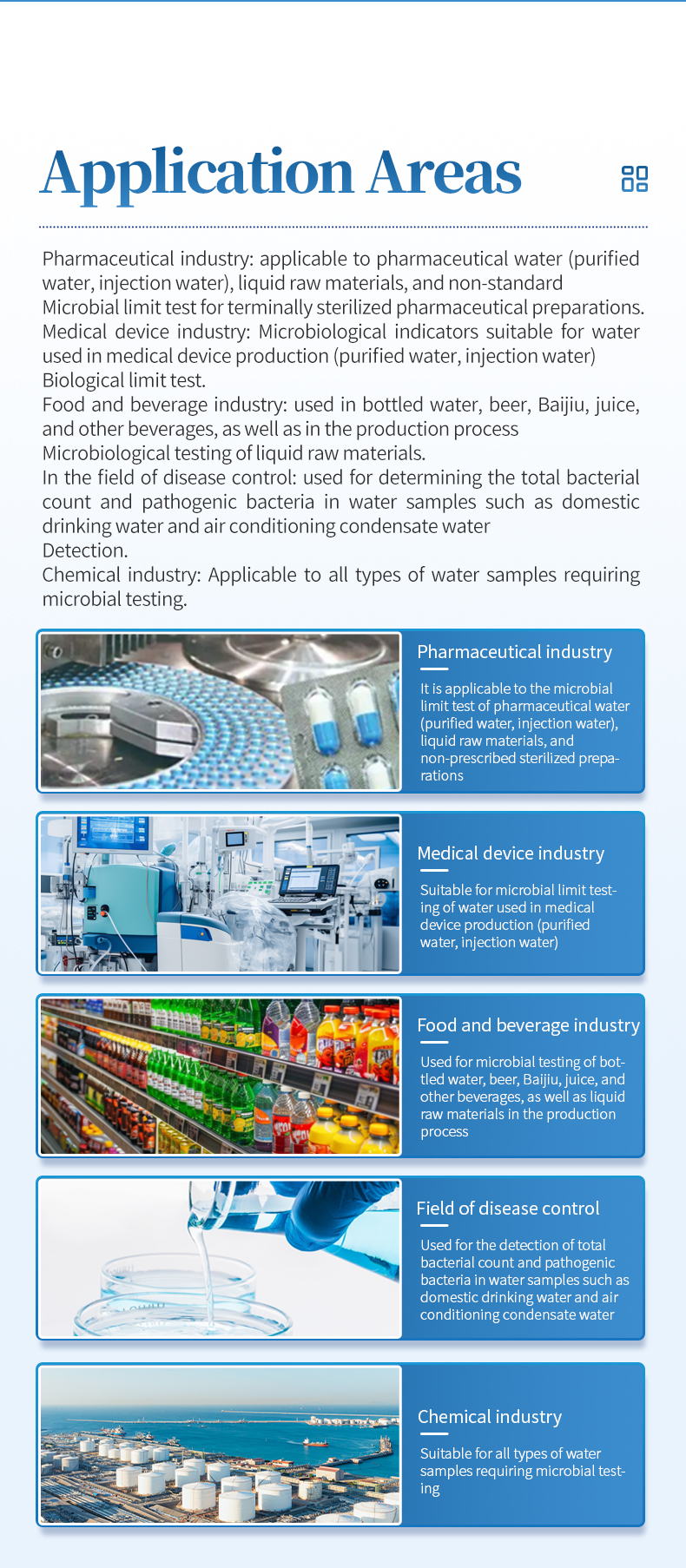
- Pharmaceutical purified water (PW) and water for injection (WFI) testing. Routine microbiological limit examination per pharmacopoeia requirements, with autoclavable stainless cups enabling cost-effective daily testing across multiple sampling points.
- Medical device manufacturing process water monitoring. Microbiological testing of purified water and WFI used in medical device production, supporting GMP compliance with reusable sterilizable filter cups.
- Food and beverage quality control. Microbiological examination of bottled water, beer, juice, and dairy products where repeated daily testing makes autoclavable cups economically advantageous.
- CDC and public health water surveillance. Total bacterial count and pathogen screening in drinking water, HVAC condensate, and environmental water samples for disease prevention programs.
- Chemical industry process water testing. Microbiological monitoring of process water and liquid raw materials in chemical manufacturing facilities.
- Cosmetics and personal care product testing. Microbial limit testing of liquid cosmetic formulations and raw materials with validated sterilizable filter cups.
Key Features & Advantages
- Autoclavable stainless steel filter cups. Ø47mm/Ø50mm, 100 mL stainless cups withstand repeated 121°C high-pressure steam sterilization — validated for GMP compliance while eliminating disposable cup procurement, storage, and waste disposal costs.
- Long-term consumable cost elimination. Over thousands of test cycles, autoclavable cups deliver cumulative savings that substantially exceed the initial system investment compared to single-use disposable cups.
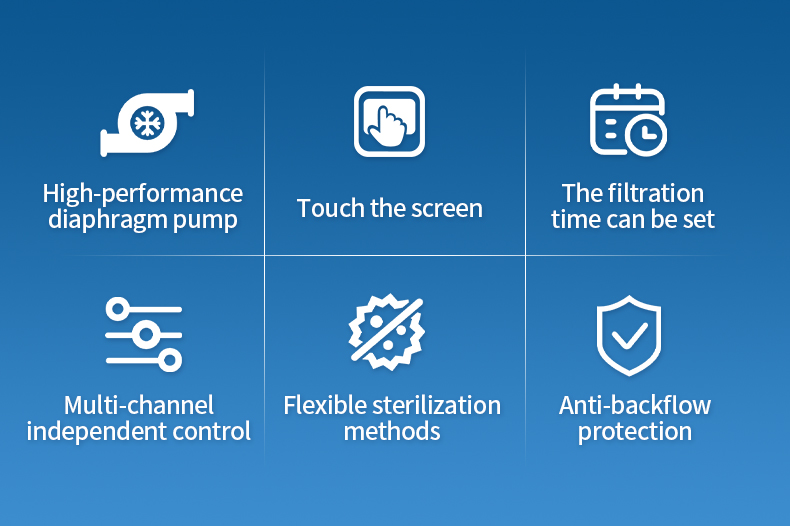
- Dual diaphragm pump system. Two integrated pumps with direct discharge eliminate external vacuum flask requirements, reducing setup complexity and validation workload.
- Independent mechanical knob control. Each filtration channel can be started or stopped independently, enabling flexible workflow management for laboratories with variable daily sample loads.
- Flame sterilization compatible filter heads. Rapid flame sterilization between consecutive samples on the same channel reduces turnaround time and cross-contamination risk during high-frequency testing sessions.
- Anti-backflow protection. Prevents filtered liquid from reversing into the pump mechanism, preserving sample integrity and protecting internal components from contamination.
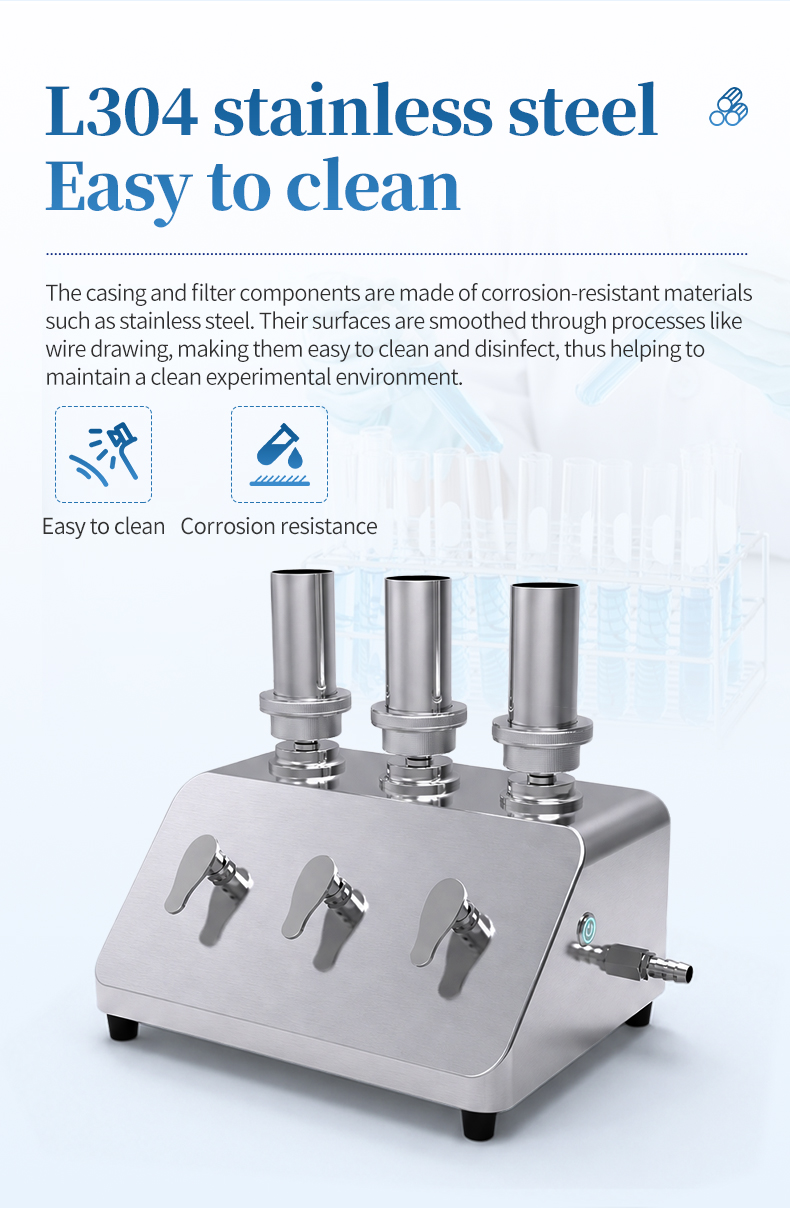
- L304 stainless steel enclosure. Corrosion-resistant brushed finish withstands routine disinfection protocols and maintains appearance in demanding laboratory environments.
- Direct discharge design. Filtered waste liquid drains directly without intermediate collection vessels, minimizing contamination points and simplifying post-test cleanup.
- High filtration flow rate. Single filter head delivers >1000 ml/min no-load and >450 ml/min full-load flow, ensuring samples are processed within standard protocol timeframes.
- Modular detachable filter assembly. Quick-release components enable rapid disassembly for autoclave loading, cleaning, and reassembly — minimizing instrument downtime between test cycles.
- Compact bench-top footprint. 363 × 238 × 202 mm at 6.0 kg requires no dedicated floor space, fitting conveniently on existing laboratory benches alongside other QC instruments.
Technical Specifications
| Parameter | Specification |
|---|
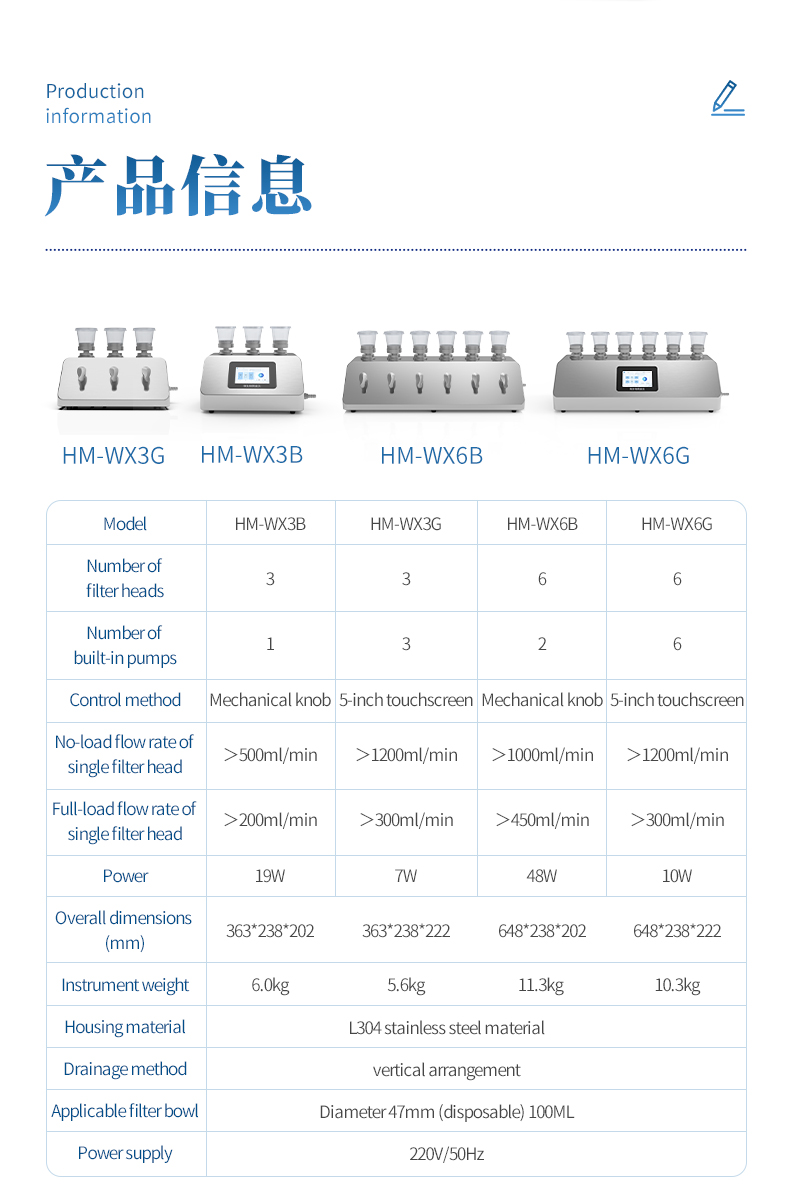
| Model | HM-WX3B+ |
| Power supply | 220V / 50Hz |
| Power consumption | 48W |
| Number of filter heads | 3 |
| Built-in pumps | 2 diaphragm pumps |
| Discharge method | Direct discharge |
| Control type | Mechanical knob |
| Applicable filter cup | Ø47mm/Ø50mm stainless steel 100 mL (autoclavable, reusable) |
| Single filter head flow rate (no load) | >1000 ml/min |
| Single filter head flow rate (full load) | >450 ml/min |
| Housing material | L304 stainless steel |
| Dimensions | 363 × 238 × 202 mm |
| Weight | 6.0 kg |
FAQ
Q1: How does the autoclavable stainless steel filter cup save costs compared to disposable cups?A typical GMP pharmaceutical laboratory performing microbiological limit testing on purified water and WFI processes dozens of samples daily. Each disposable Ø47mm filter cup carries a recurring per-unit expense. With three filtration channels running multiple cycles per day, annual consumable costs for disposable cups can reach several thousand dollars. The HM-WX3B+ stainless steel cups can be autoclaved at 121°C and reused across thousands of test cycles with no degradation in performance or sterility assurance. Over the instrument's service life, the cumulative savings from eliminated disposable cup purchases substantially exceed the initial system cost, making the + series a cost-effective investment for high-frequency testing laboratories.
Q2: Is the stainless steel filter cup compatible with standard autoclave sterilization protocols?Yes. The Ø47mm/Ø50mm stainless steel filter cups are designed for standard 121°C high-pressure steam autoclave cycles, which is the most widely validated sterilization method in GMP pharmaceutical laboratories. After each filtration test, simply remove the stainless cup assembly, place it in the autoclave with other sterile supplies, and run a standard sterilization cycle. The cups are fabricated from corrosion-resistant stainless steel that maintains dimensional stability and surface finish across thousands of autoclave cycles, ensuring consistent filtration performance and validated sterility assurance throughout the instrument's service life.
Q3: Can the HM-WX3B+ perform both parallel and sequential filtration?Absolutely. The three filtration channels are controlled by independent mechanical knob switches, allowing operators to run all three channels simultaneously for maximum throughput, or start and stop individual channels as samples arrive. This flexibility is particularly valuable in pharmaceutical QC laboratories where sample submission times vary throughout the day. During peak hours, all three channels can operate in parallel; during quieter periods, individual channels can be activated as needed, conserving pump wear and reducing noise without requiring full system shutdown.
Q4: How does flame sterilization work between consecutive tests?After completing a filtration and removing the filter membrane for culture, the filter head surface can be rapidly sterilized using a standard laboratory Bunsen burner or alcohol lamp. The flame passes over the stainless steel filter head for several seconds, achieving thermal decontamination of the contact surface. This is particularly useful when processing multiple samples on the same channel in rapid succession, as it eliminates the need for a full autoclave cycle between consecutive tests. For comprehensive sterilization validation, the complete cup assembly should be autoclaved after the daily testing session.
Q5: What filtration flow rate can I expect when testing purified water samples?The HM-WX3B+ achieves a single filter head flow rate exceeding 1000 ml/min under no-load conditions and over 450 ml/min under full-load conditions. For a standard 100 mL purified water sample, the filtration process typically completes within seconds to a few minutes depending on the sample viscosity and membrane resistance. The dual diaphragm pump system provides stable vacuum pressure throughout the filtration cycle, and the direct discharge design ensures there is no flow restriction from external collection vessels. This performance comfortably accommodates the volume and time requirements specified in standard pharmacopoeial microbiological limit test methods.
Q6: Does the L304 stainless steel housing require special maintenance?No special maintenance is required beyond routine laboratory cleaning protocols. The L304 stainless steel housing features a brushed finish that resists corrosion from common laboratory disinfectants including 70% isopropyl alcohol, quaternary ammonium compounds, and sodium hypochlorite solutions. Regular surface wiping with approved disinfectants maintains both the cleanliness and appearance of the instrument. The corrosion-resistant material is specifically chosen for pharmaceutical cleanroom environments where frequent surface decontamination is standard practice, ensuring the housing maintains its integrity and professional appearance throughout the instrument's service life.
Q7: How does the anti-backflow protection improve testing reliability?The anti-backflow mechanism prevents filtered liquid from reversing into the pump system and contaminating subsequent samples. In membrane filtration systems without backflow protection, pressure fluctuations during pump cycling can cause small volumes of filtered liquid to flow backward, potentially carrying microorganisms from a previous sample into the filtration pathway. The HM-WX3B+ incorporates check valves in each pump channel that permit flow only in the forward direction, ensuring that each filtration cycle processes only the current sample. This is critical for GMP compliance where sample cross-contamination must be eliminated as a source of testing error.
Article address:
https://www.environmentinstrum.com/pro15/autoclavable-microbial-limit-tester-gmp-lab.html



 +86 17853698681