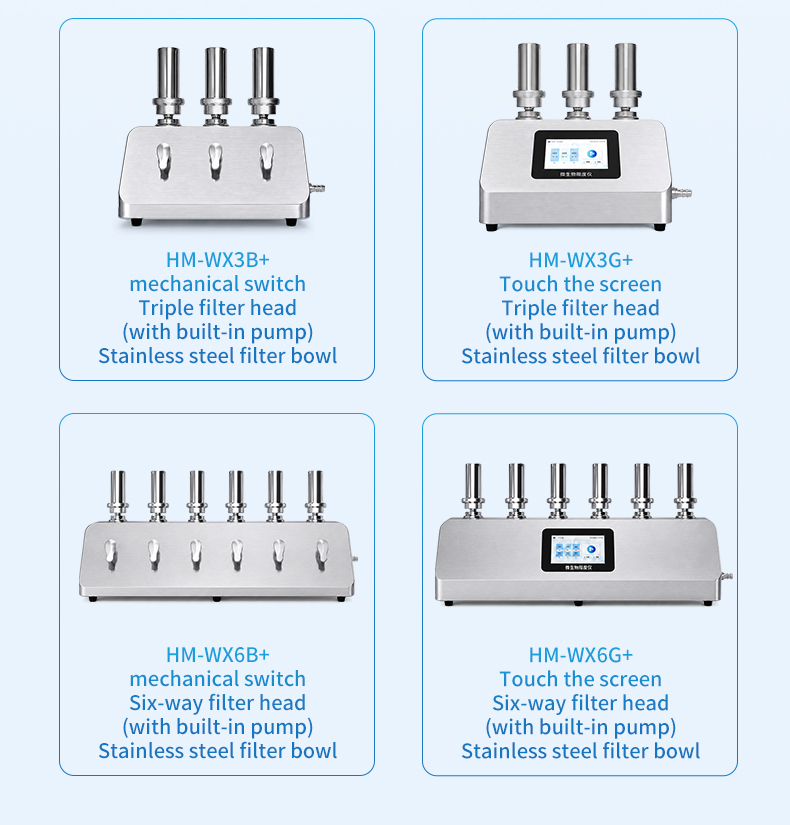
Product Introduction
Pharmaceutical manufacturing facilities operating multiple production lines face a significant operational bottleneck in microbiological water testing: each water system sampling point requires individual membrane filtration, and laboratories serving several production areas may need to process 20 to 50 or more samples per day. Triple-channel filtration systems create a throughput ceiling that forces technicians to run multiple sequential batches, extending the workday and delaying test result availability. At the same time, the cost of disposable filter cups at this volume becomes a substantial line item in the laboratory consumables budget, and supply interruptions can halt testing operations entirely.
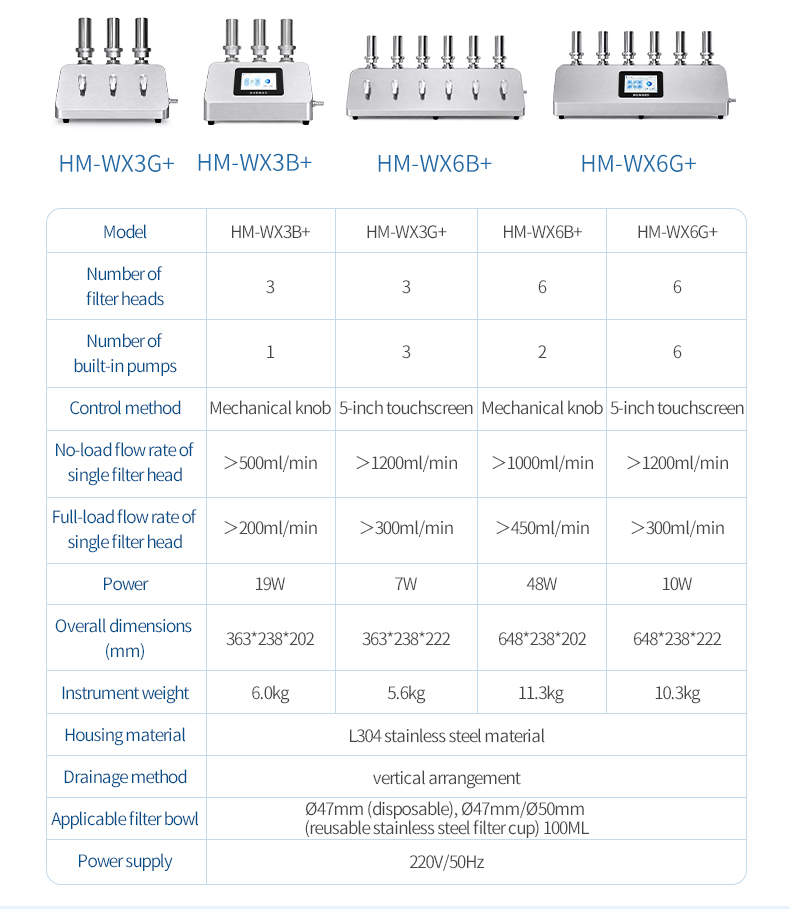
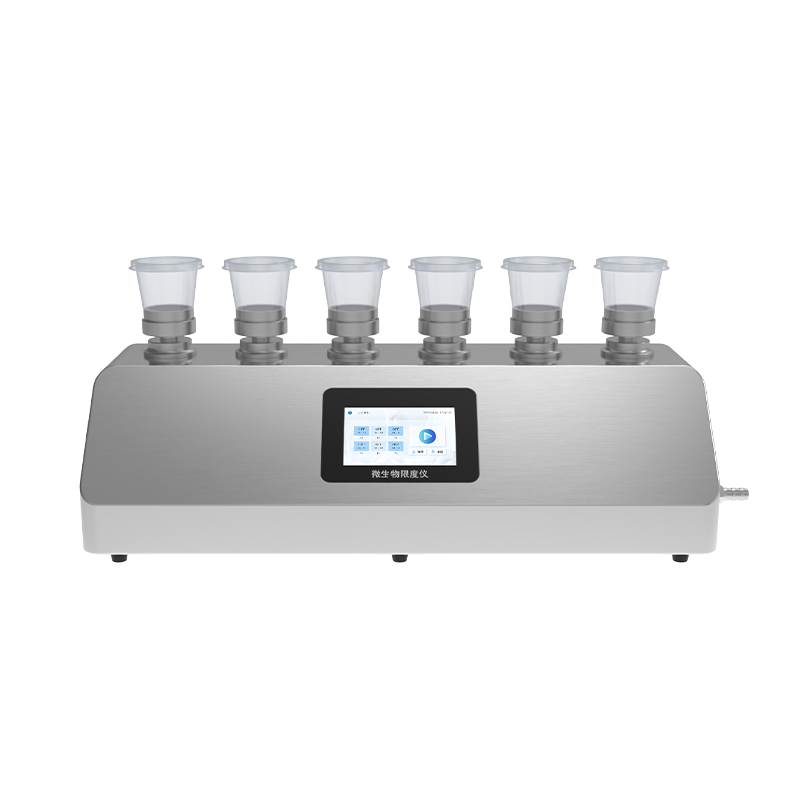
The HM-WX6B+ resolves both the throughput and cost challenges simultaneously. With six independent filtration positions, it doubles the per-batch processing capacity compared to triple-channel systems, enabling technicians to process an entire day's sample set in fewer batch cycles. For a facility testing 30 samples per day, a triple-channel system requires ten sequential filtration batches, while the HM-WX6B+ completes the same workload in just five — cutting active filtration time nearly in half and freeing technicians for other quality control tasks.
Each of the six filtration positions is equipped with an autoclavable Ø47mm/Ø50mm stainless steel filter cup rated for repeated 121°C high-pressure steam sterilization. At the sample volumes typical of pharmaceutical water testing programs, the annual cost of disposable cups is substantial — the HM-WX6B+ eliminates this expense entirely, and the cumulative savings over the instrument's service life far exceed the initial purchase price. The stainless cups are simply autoclaved after each test session and returned for the next round, with no procurement, inventory management, or hazardous waste disposal requirements.
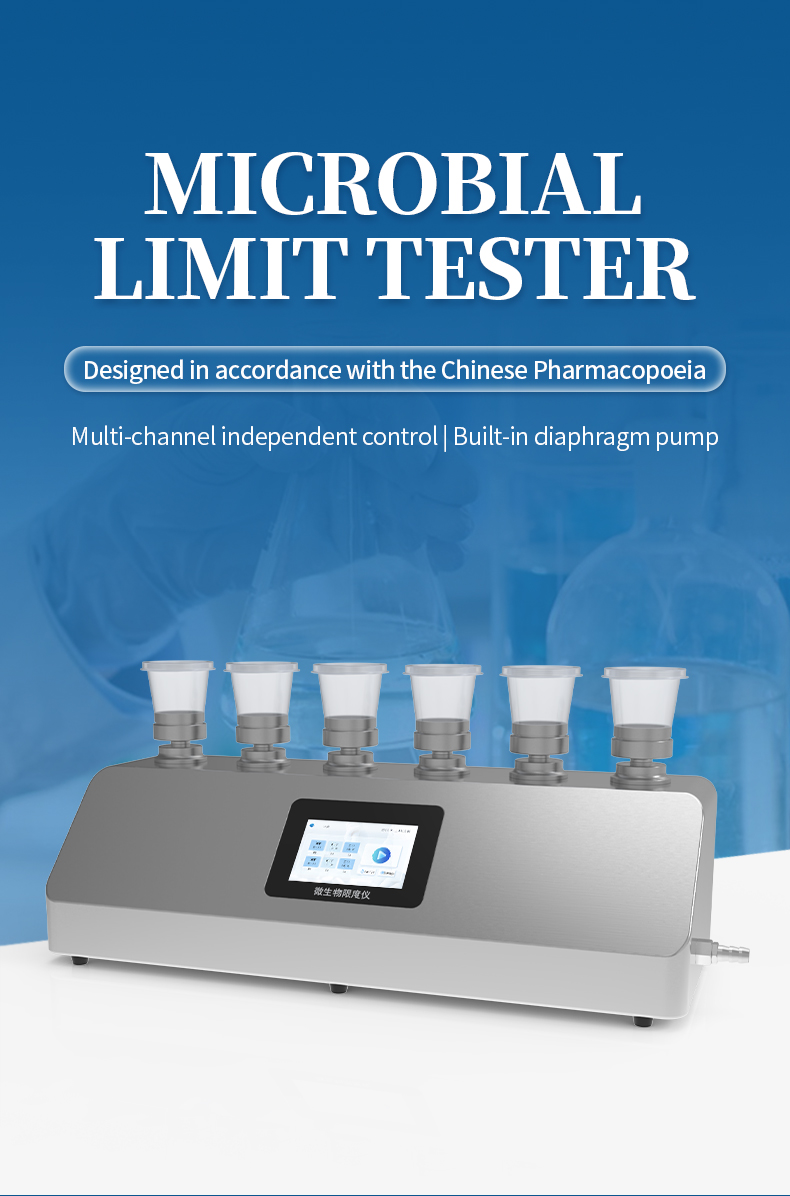
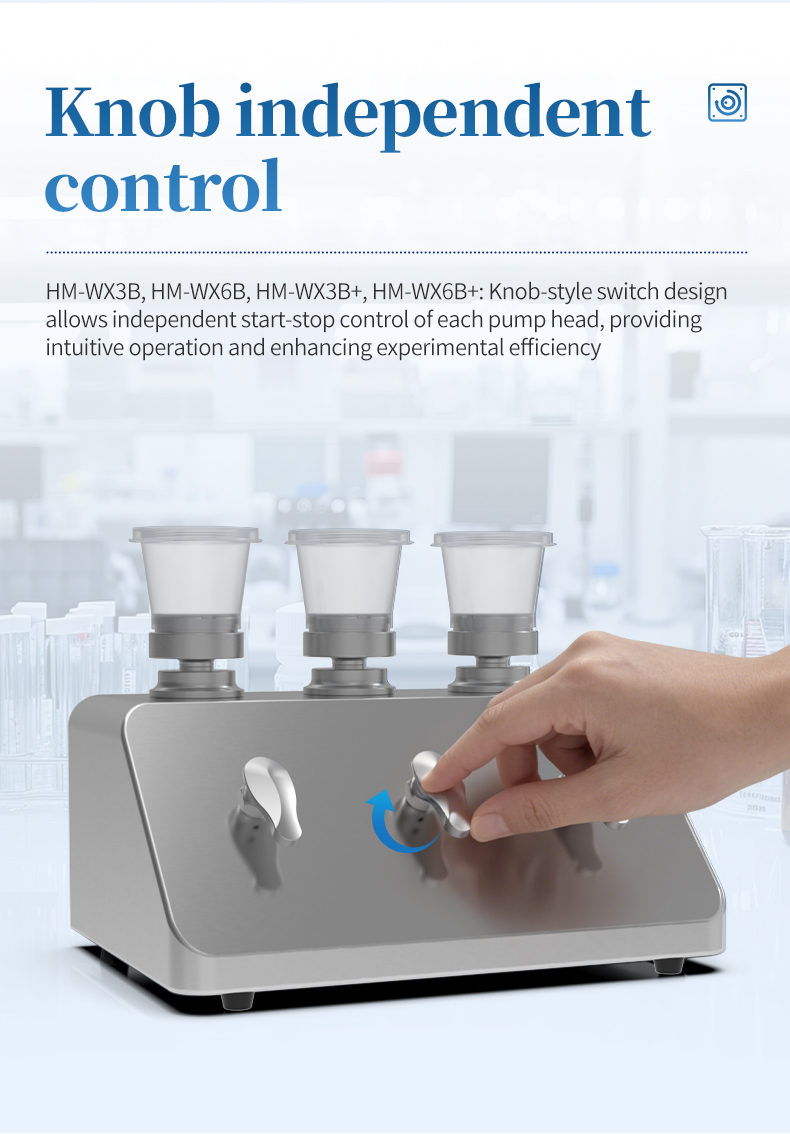
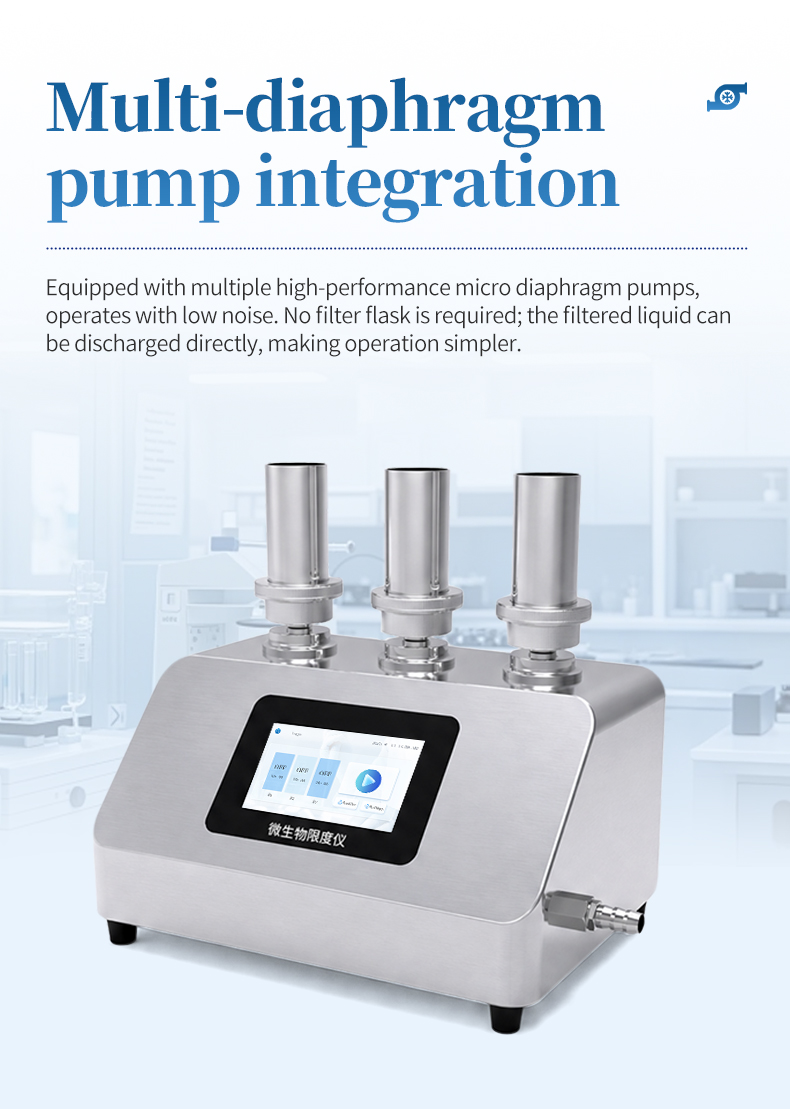
The dual built-in diaphragm pumps provide stable vacuum with direct discharge capability, eliminating external vacuum flasks and their associated cleaning validation. Mechanical knob switches give each channel independent on/off control, allowing flexible batch processing or individual sample handling as workflow demands change. The L304 stainless steel housing withstands routine disinfection, and the anti-backflow protection ensures sample integrity across all six channels. At 648 × 238 × 202 mm and 11.3 kg, the HM-WX6B+ provides high-throughput filtration capability in a bench-top form factor that integrates into existing laboratory infrastructure without requiring dedicated floor space.
Applications
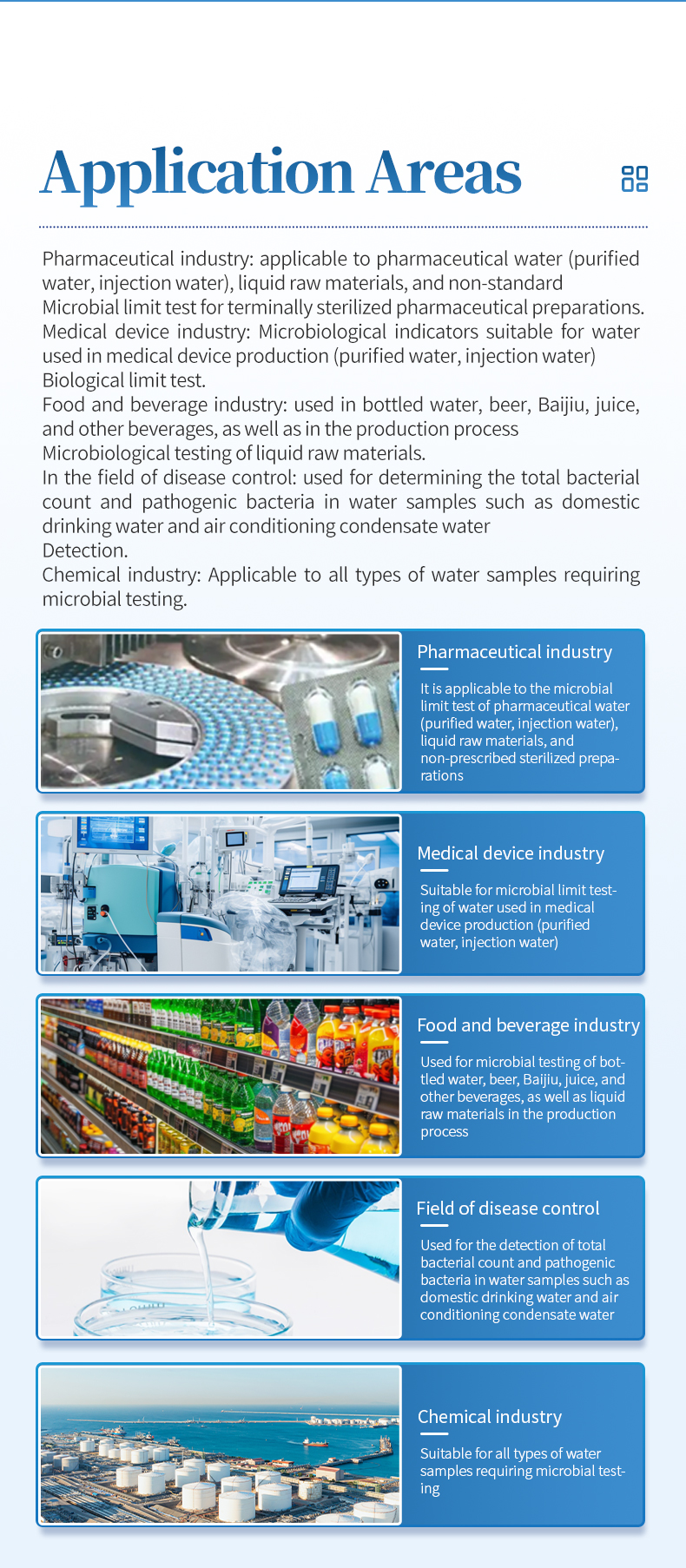
- Multi-line pharmaceutical water testing. Simultaneous PW and WFI microbiological examination across multiple production areas and water distribution loops, reducing daily testing cycle time for facilities with high sample volumes.
- Medical device manufacturing water monitoring. Batch microbiological assessment of process water from multiple manufacturing lines with autoclavable cups for validated GMP compliance and consumable cost control.
- Food and beverage production quality control. High-throughput microbiological screening of bottled water, beer, juice, and dairy products across multiple production batches or product lines.
- CDC and environmental water surveillance. Large-scale drinking water and environmental water sample processing for public health monitoring programs with limited laboratory staff.
- Contract testing laboratories. Maximizing sample throughput per instrument for laboratories serving multiple pharmaceutical clients with competitive turnaround time requirements.
- Chemical and cosmetics industry batch testing. Simultaneous microbiological testing of process water and product samples across multiple product lines for efficient quality certification.
Key Features & Advantages
- Doubled throughput capacity. Six filtration positions process twice the samples per batch versus triple-channel systems — reducing daily batch cycles and accelerating test result availability for high-volume pharmaceutical facilities.
- Autoclavable stainless steel filter cups. Ø47mm/Ø50mm, 100 mL cups withstand repeated 121°C autoclave cycles — validated sterility without disposable cup procurement, inventory, or waste disposal costs.
- Annual consumable cost elimination. For facilities processing 30+ samples daily, autoclavable cups deliver substantial annual savings in disposable cup expenses, with cumulative lifetime savings far exceeding the instrument purchase price.
- Dual diaphragm pump system. Two integrated pumps with direct discharge eliminate external vacuum flask requirements and their associated cleaning validation workload.
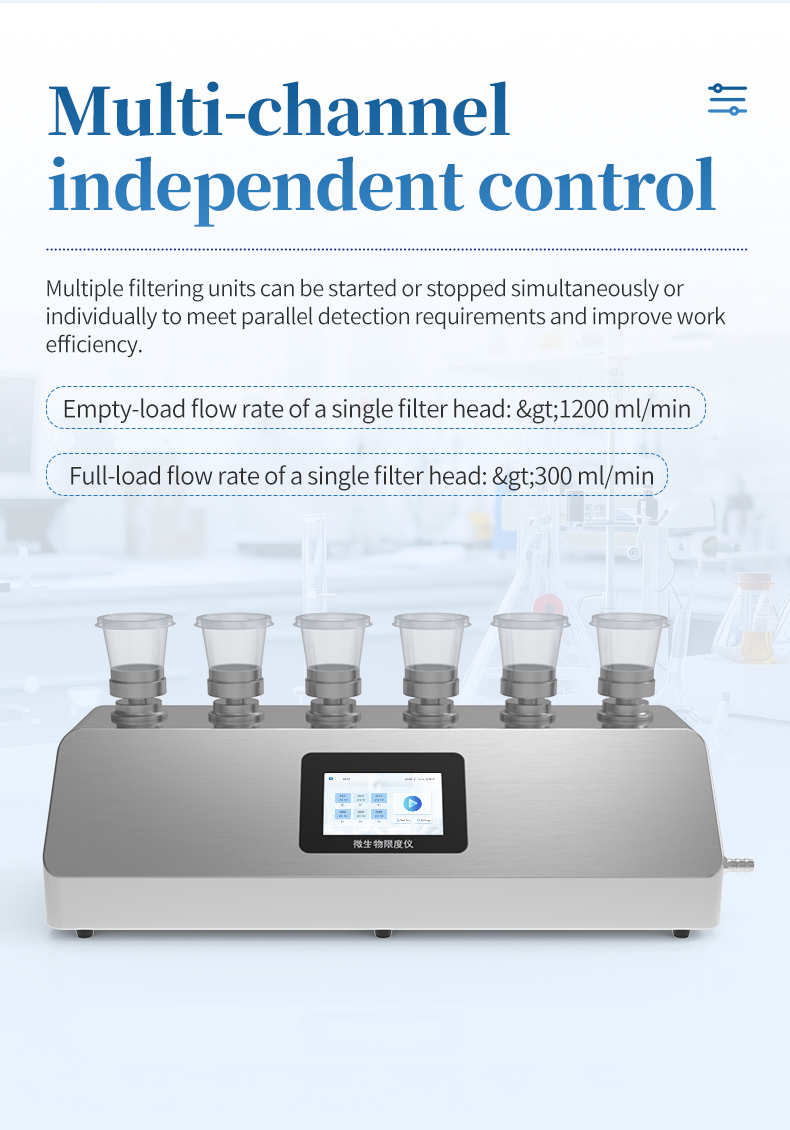
- Independent mechanical knob control. Six individual on/off switches enable flexible workflow — all channels simultaneously for maximum throughput, or selective activation for smaller sample batches.
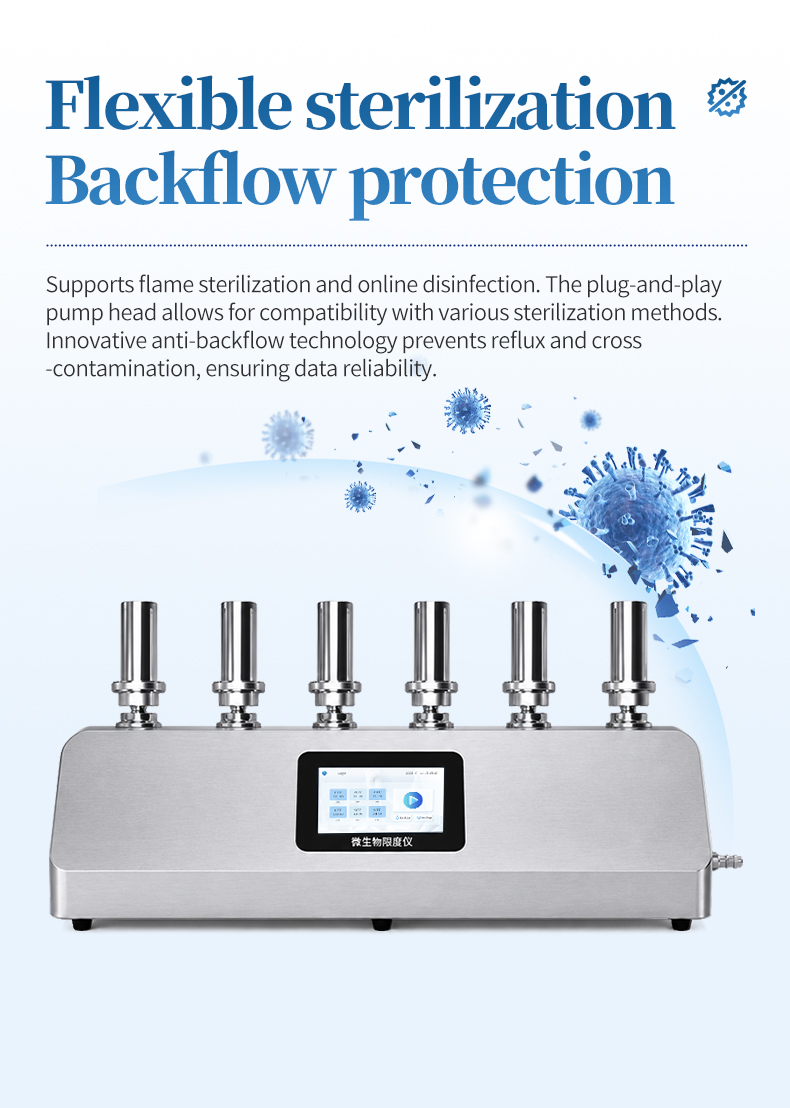
- Flame sterilization compatible. Filter heads support rapid thermal decontamination between consecutive samples, minimizing cross-contamination risk in high-frequency testing sessions.
- Anti-backflow protection across all channels. Check valves prevent reverse flow in each channel, ensuring sample integrity is maintained even when all six positions operate simultaneously.
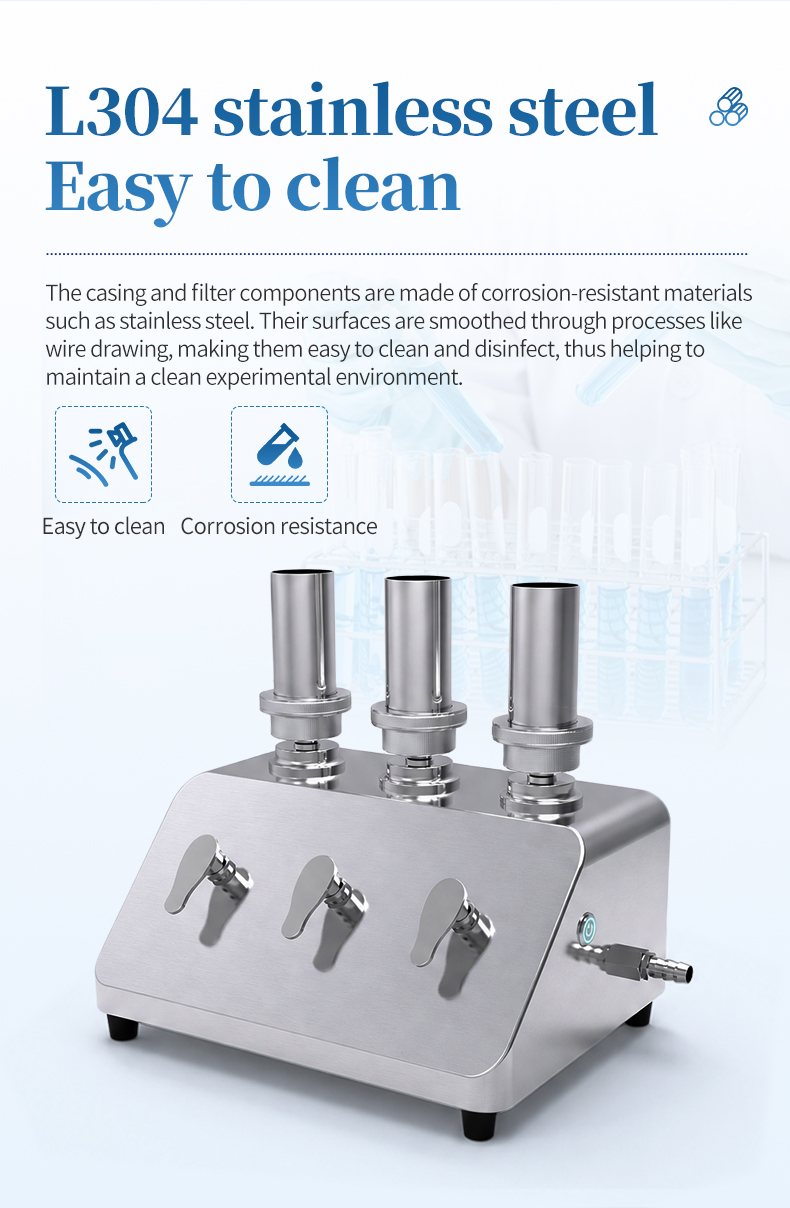
- L304 stainless steel enclosure. Brushed corrosion-resistant finish withstands routine laboratory disinfection protocols and maintains professional appearance in demanding QC environments.
- Direct discharge design. Eliminates intermediate waste collection vessels for six channels, significantly reducing contamination points and post-batch cleanup time compared to external flask configurations.
- High flow rate performance. >1000 ml/min no-load and >450 ml/min full-load per filter head ensures each of the six samples is processed efficiently within standard protocol timeframes.
- Modular detachable filter assemblies. Quick-release design allows rapid removal of all six cup assemblies for autoclave loading and reinstallation — minimizing instrument downtime between test cycles.
- Bench-top form factor. 648 × 238 × 202 mm at 11.3 kg provides six-channel high-throughput capability without requiring dedicated floor space or infrastructure modifications.
Technical Specifications
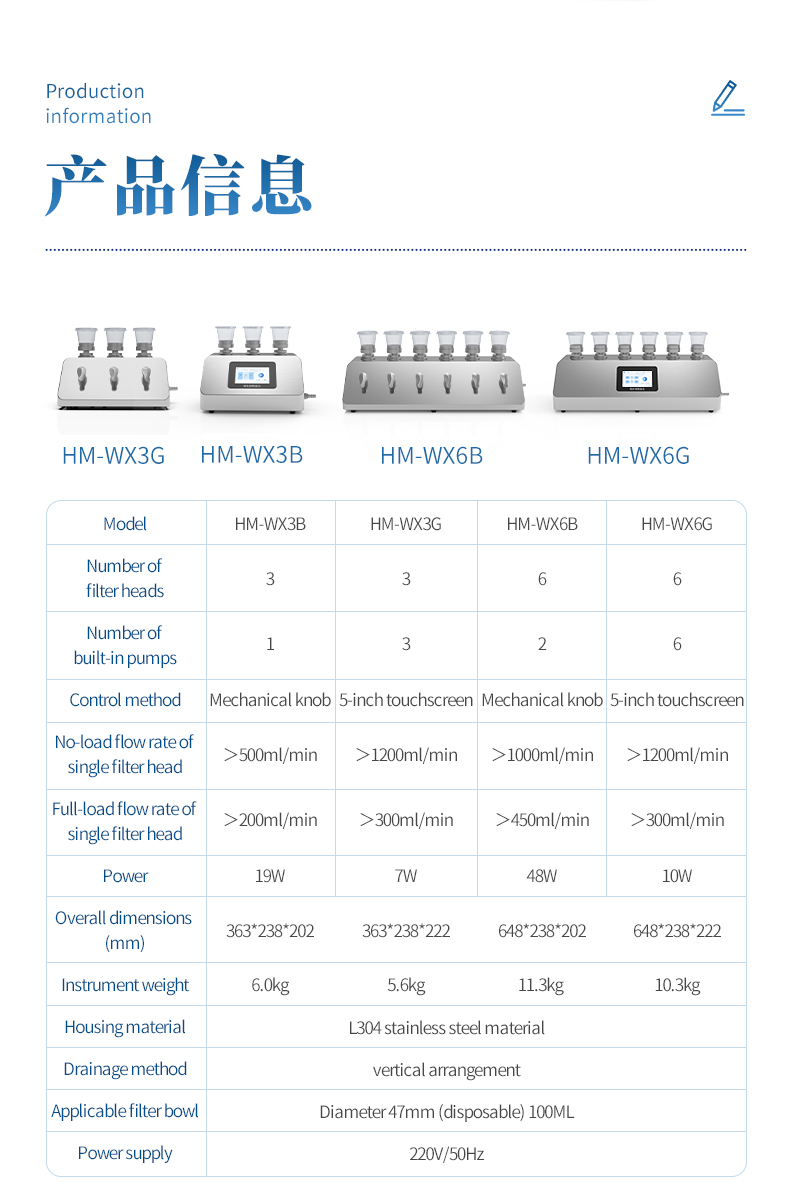
| Parameter | Specification |
|---|
| Model | HM-WX6B+ |
| Power supply | 220V / 50Hz |
| Power consumption | 48W |
| Number of filter heads | 6 |
| Built-in pumps | 2 diaphragm pumps |
| Discharge method | Direct discharge |
| Control type | Mechanical knob |
| Applicable filter cup | Ø47mm/Ø50mm stainless steel 100 mL (autoclavable, reusable) |
| Single filter head flow rate (no load) | >1000 ml/min |
| Single filter head flow rate (full load) | >450 ml/min |
| Housing material | L304 stainless steel |
| Dimensions | 648 × 238 × 202 mm |
| Weight | 11.3 kg |
FAQ
Q1: How much throughput improvement does the six-channel system provide over triple-channel models?The HM-WX6B+ doubles the per-batch processing capacity compared to triple-channel systems. For a pharmaceutical facility testing 30 water samples per day, a triple-channel system requires ten sequential filtration batches, while the HM-WX6B+ completes the same workload in five batches. This cuts active filtration time by approximately 50%, reducing the technician's total hands-on time and accelerating test result availability. In practice, many laboratories find that the six-channel configuration allows them to complete their daily water testing program within a standard morning shift rather than extending into the afternoon, freeing staff for other quality control activities.
Q2: Can the six channels operate independently for different sample types?Yes. Each of the six channels has an independent mechanical knob on/off switch, allowing operators to activate only the channels needed for the current sample batch. If you have four samples to process, you can use four channels and leave two idle — or if you need to process a single urgent sample, you can use just one channel. This flexibility is important in pharmaceutical QC laboratories where sample submission schedules vary throughout the day, and where different sample types may require different processing protocols.
Q3: How does the cost of autoclavable cups compare to disposable cups at high sample volumes?At high sample volumes, the cost advantage of autoclavable cups becomes compelling. A pharmaceutical facility processing 30 samples per day, five days per week, uses approximately 7,500 disposable filter cups per year. Annual consumable costs for disposable cups are substantial. The HM-WX6B+ stainless steel cups eliminate this expense entirely after the initial purchase. Over a typical instrument service life of 5–7 years, cumulative disposable cup savings are many times the initial instrument purchase price. Additionally, autoclavable cups eliminate supply chain risk from cup inventory shortages and reduce biohazard waste disposal volume.
Q4: How are the two diaphragm pumps distributed across six channels?The dual diaphragm pump system provides vacuum to all six filtration channels through an integrated manifold. This configuration ensures that vacuum pressure is distributed evenly across all active channels, regardless of whether one or six channels are operating simultaneously. The direct discharge design means each channel's filtered liquid drains independently without cross-talk between channels. If one channel completes filtration before the others, it does not affect the vacuum available to the remaining active channels. The pump system is sized to maintain stable flow rates across all six positions even under simultaneous full-load conditions.
Q5: What is the autoclave cycle protocol for the stainless steel filter cups?The stainless steel filter cups are compatible with standard pharmaceutical autoclave sterilization protocols — typically 121°C at 103 kPa for 15–20 minutes, which is the most widely validated steam sterilization cycle in GMP facilities. After completing the day's filtration tests, the cup assemblies are removed from the instrument, placed in the autoclave with other sterile supplies, and processed through the standard sterilization cycle. After autoclaving, the cups are stored under standard sterile conditions until the next testing session. This workflow is analogous to the validated re-sterilization of other stainless steel pharmaceutical manufacturing equipment, and the validation approach follows the same established principles.
Q6: Is the HM-WX6B+ suitable for contract testing laboratories?Yes. Contract testing laboratories benefit significantly from the six-channel high-throughput design, as it maximizes the number of samples processed per instrument per day — directly improving revenue capacity and turnaround time competitiveness. The autoclavable stainless steel cups are particularly advantageous for contract labs, as they eliminate the variable consumable cost per sample that reduces profit margins at high volumes. The mechanical knob control is straightforward and requires minimal training for new technicians, supporting the rapid onboarding typical of contract laboratory staffing models.
Q7: How does the 11.3 kg weight affect laboratory installation?At 11.3 kg, the HM-WX6B+ is manageable for two-person installation onto a standard laboratory bench without mechanical lifting equipment. The 648 × 238 × 202 mm footprint fits on most standard laboratory benches alongside other QC instruments. Once positioned, the instrument does not need to be moved during normal operation — the detachable stainless steel cups are removed for autoclave processing, and routine maintenance is performed in place. The weight is comparable to other bench-top pharmaceutical QC instruments and does not require special bench reinforcement or floor-mounted installation.
Article address:
https://www.environmentinstrum.com/pro15/six-channel-microbial-limit-tester-high-throughput.html



 +86 17853698681